If you’re researching flight training, the
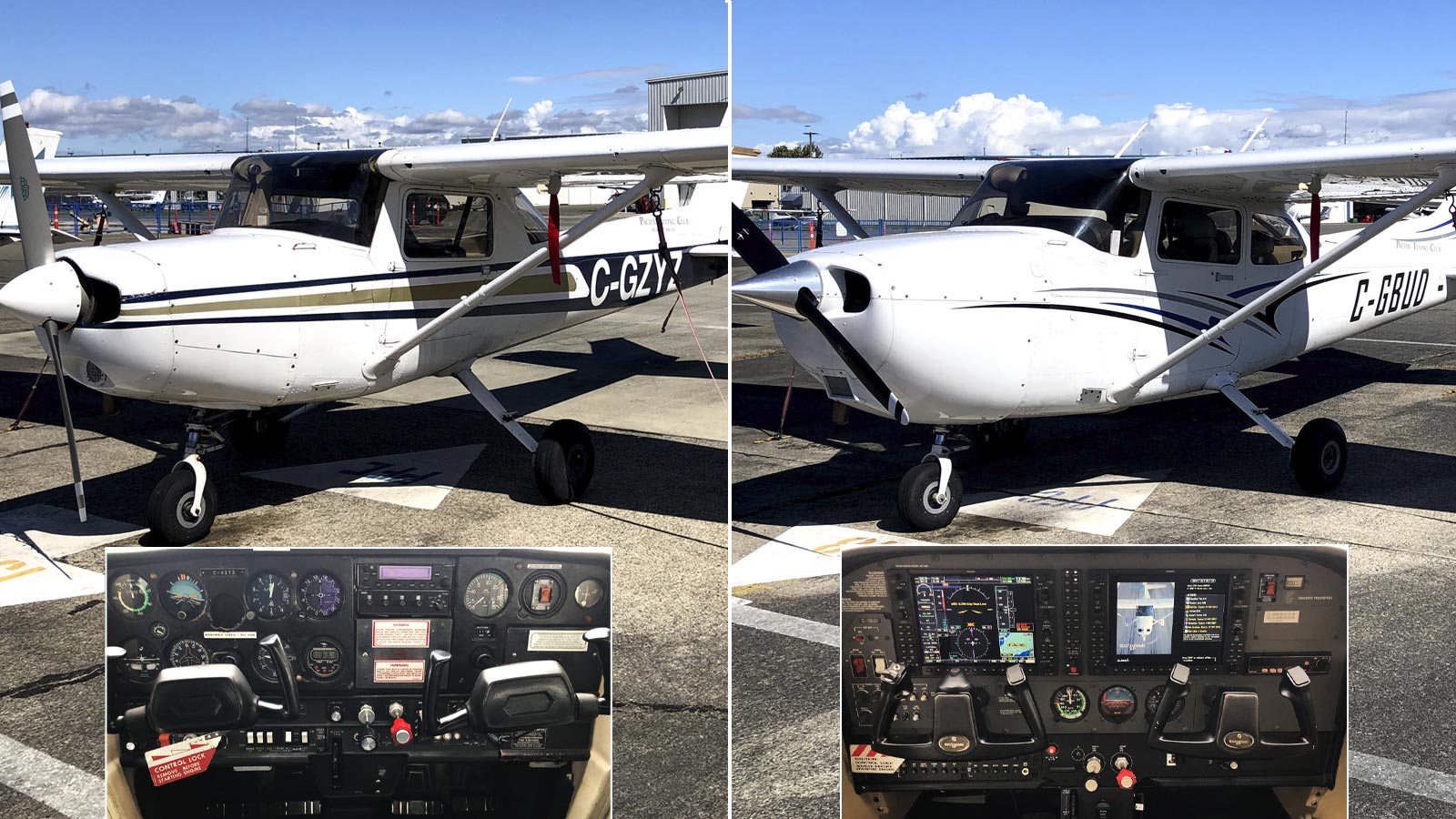
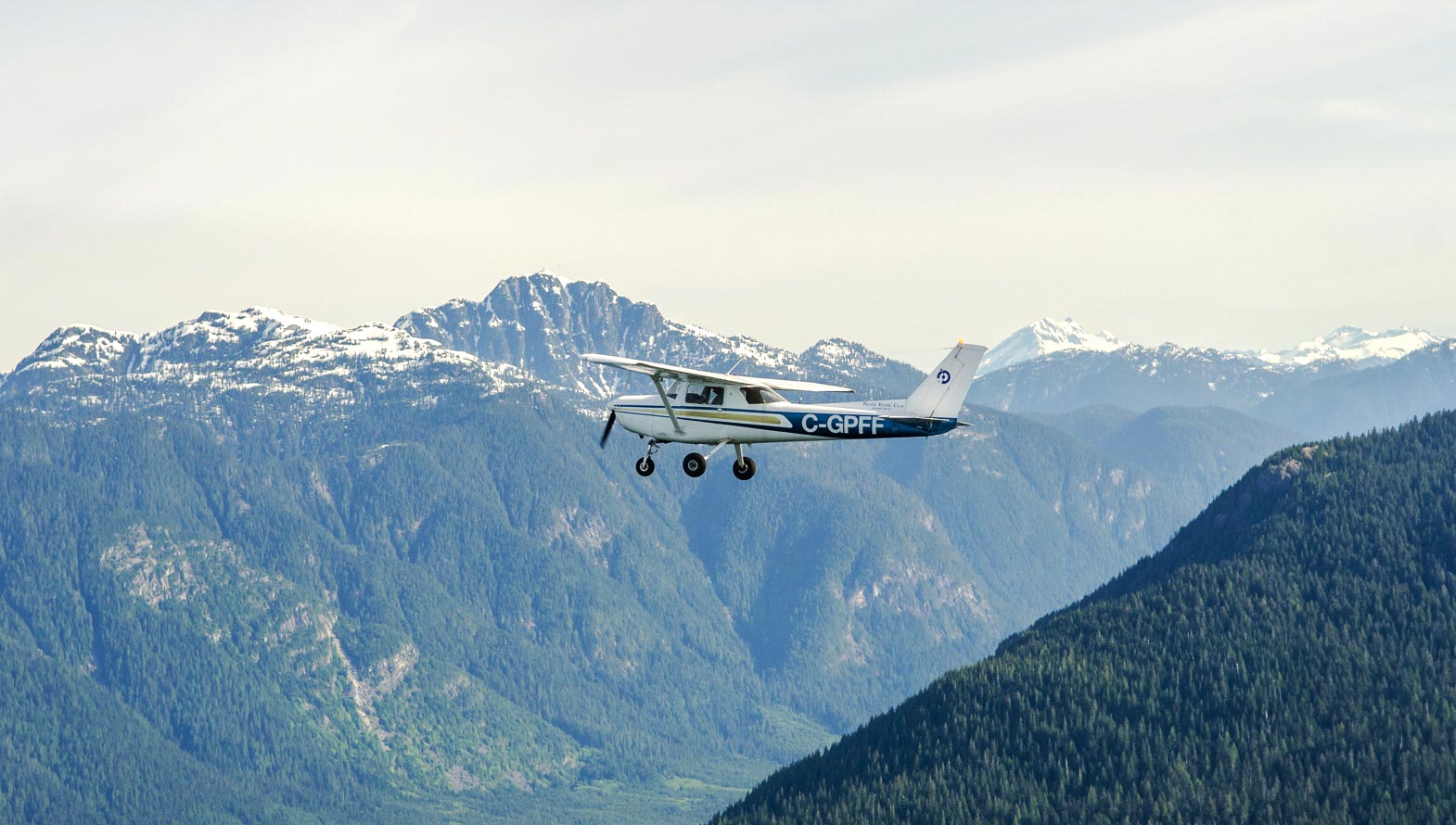
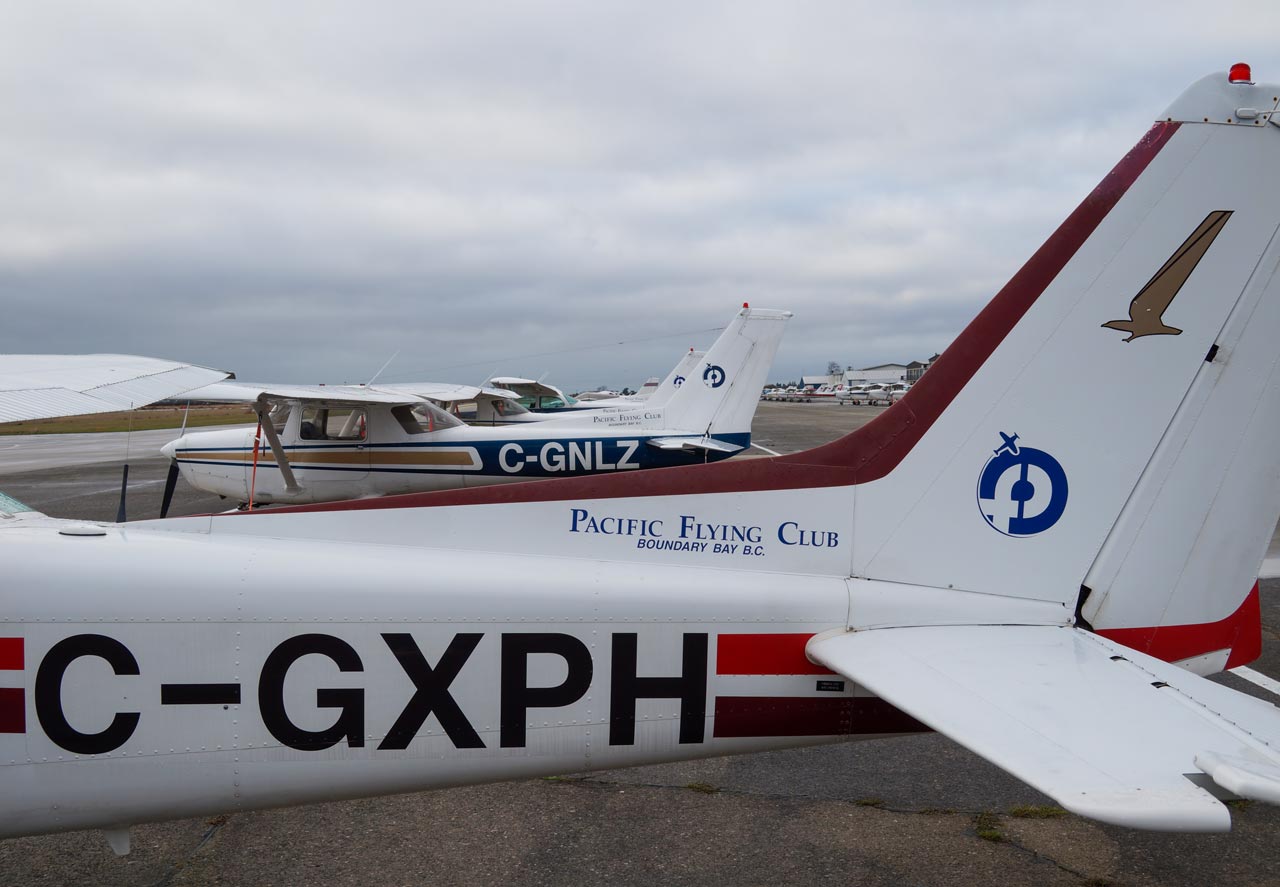
Cessna 152 vs 172 question tends to come up early. Both are high-wing, all-metal Cessnas with fixed tricycle landing gear and a fixed-pitch propeller, and parked side by side at Boundary Bay Airport the family resemblance is obvious. Look closer and the 172 is bigger in almost every dimension, with more power and a lot more carrying capacity, and those differences affect how each one flies and when a student is likely to use it. Pacific Flying Club flies both types, and this third article in our technical series goes through what separates them.
The Cessna 152 vs 172 at a Glance
The table below gives typical published figures for the models most commonly found in training fleets. Exact numbers vary by model year, engine, and installed equipment, so the
Pilot’s Operating Handbook (POH) and weight and balance records for the specific aircraft always take priority.
|
Cessna 152 |
Cessna 172 |
| Seats |
2 |
4 |
| Engine |
Lycoming O-235, about 110 hp |
Lycoming O-320 or IO-360, 160 to 180 hp |
| Maximum takeoff weight |
1,670 lb |
2,400 to 2,550 lb |
| Useful load (typical) |
About 570 to 590 lb |
About 900 to 990 lb |
| Standard fuel capacity |
26 US gal |
43 to 56 US gal |
| Cruise speed |
About 107 knots |
About 120 to 124 knots |
| Rate of climb (sea level) |
About 715 ft/min |
About 700 to 730 ft/min |
| Production |
1977 to 1985 |
1956 to present (paused 1986 to 1996) |
Size and Seating
The most obvious difference is the cabin. The
Cessna 152 is a two-seat aircraft with a narrow cabin, so instructor and student sit shoulder to shoulder. The
Cessna 172 seats four and has a wider cabin, a longer fuselage, and a wingspan of about 36 feet compared to roughly 33 feet on the 152.
The extra room is useful in practice. Charts, a kneeboard, and a headset bag are easier to manage in a 172, and taller or broader pilots are usually more comfortable in it. The rear seats also make it the obvious choice once a pilot is licensed and wants to take friends or family flying.
Engine and Power
Cessna 152: Lycoming O-235
Every 152 left the factory with a
Lycoming O-235, a four-cylinder, air-cooled, carbureted engine producing about 110 horsepower. Lycoming has been building engines in the O-235 family since 1942, and in the 152 it burns roughly six US gallons per hour in cruise.
Cessna 172: Lycoming O-320 and IO-360
The 172 has used several engines over its long production run. Pacific Flying Club’s 172 fleet includes
P,
R, and
SP models. The 172P uses a carbureted 160 hp Lycoming O-320, while the later 172R and 172SP use the fuel-injected Lycoming IO-360, rated at 160 hp in the R and 180 hp in the SP. Students moving from a 172P to an R or SP will find that starting procedures and mixture handling differ a little, and that a fuel-injected engine doesn’t need carburetor heat because there’s no carburetor to ice up.
Looking at the climb figures in the table, the 152 and 172 climb at almost the same rate despite the difference in horsepower. The reason is weight. At maximum takeoff weight, both aircraft carry about 15 pounds per horsepower, so the 172’s bigger engine is mostly spent carrying more people and fuel rather than climbing faster.
Useful Load and Weight and Balance
Useful load is the weight an aircraft can carry beyond its own empty weight, including people, baggage, and fuel.
A typical 152 has a useful load of around 580 pounds. Full standard fuel weighs about 156 pounds, which leaves roughly 425 pounds for occupants and baggage. Two average adults fit without trouble, but two larger adults may need to fly with partial fuel to stay within limits. Instructors and students run the weight and balance numbers carefully on most 152 flights, and planning for less than full tanks is common.
The 172 has more room to work with. With a useful load in the range of 900 pounds or more, an instructor and student can usually take full standard fuel with plenty of margin. Put four adults in it, though, and fuel usually has to come down, so the same planning habits apply.
How They Fly
Both aircraft handle predictably, which is a large part of why they became standard trainers. Where they differ is in how they respond to the air around them.
The 152 is light and has a lower
wing loading, meaning less aircraft weight is supported by each square foot of wing. It’s responsive, with light control forces, but it also gets pushed around more by turbulence and gusts. On a gusty crosswind day at Boundary Bay, a 152 keeps a student busy on final approach, which is good practice for crosswind technique.
The 172 is heavier and feels more settled, especially in bumpy air and on approach. Pitch forces are heavier as flaps come down, and it holds its attitude with less correction from the pilot. Both types use electrically operated flaps with a maximum setting of 30 degrees on the models PFC operates, so flap management works the same way in each. For more on why both aircraft share the high-wing, strut-braced layout, see our article on
the Cessna 172’s high-wing design.
Panels and Avionics
Most of PFC’s 152s and 172s are equipped with traditional analog instruments, often called steam gauges. Two of the club’s 172s, C-FCAP and C-GBUD, are fitted with the
Garmin G1000 glass cockpit, which gives students a chance to train on an integrated digital panel when they’re ready for it. You can see the individual aircraft on our
Cessna 172 fleet page and
Cessna 152 fleet page.
Operating Cost
Because the 152 is lighter, burns less fuel, and has a smaller engine, it costs less per hour to rent than a 172. A Private Pilot Licence in Canada requires a minimum of 45 flight hours, and most students fly more than that, so the hourly difference is noticeable by the end of training. Current figures for both aircraft are listed on PFC’s
rental and instruction rates page. For the 152’s published specifications in more detail,
AOPA’s Cessna 152 fact sheet is a good reference.
Why Flight Schools Use Both
Operating two types lets a school match the aircraft to the lesson. The 152 suits early training, where most of the time goes into straight-and-level flight, turns, stalls, and circuits, and where a lower hourly rate helps the student’s budget. The 172 becomes more useful once training moves on to longer cross-country flights, night flying, instrument work, and
commercial pilot training, where longer range and extra seats come in handy.
The student matters too. An instructor and student who are both on the larger side may simply fit better in a 172 from the first lesson. Your instructor will help decide which aircraft suits your training, and because the two types have similar cockpits, systems, and handling, moving from the 152 to the 172 is usually a short checkout.
Why the 152 Replaced the 150, and Why It Never Came Back
The 152 was a modernized version of the
Cessna 150, which used a 100 hp Continental O-200 engine. By the late 1970s, the 80/87 octane avgas that engine was designed for was being replaced by 100LL, and the higher lead content caused spark plug fouling and extra maintenance. Cessna switched to the Lycoming O-235, which handled 100LL better, produced a little more power, and could run longer between overhauls. Maximum weight went up from 1,600 to 1,670 pounds at the same time, and maximum flap deflection dropped from 40 to 30 degrees to improve climb performance with flaps extended.
In 1986, Cessna stopped building all of its piston singles, largely because of product liability costs in the United States. When production restarted in 1996, the 172 came back and the 152 didn’t. Every 152 flying today, including the ones at PFC, was built in 1985 or earlier. They’re still in service because the airframes are simple and durable, and because they’re kept up by ongoing
maintenance.
Which One Will You Train In?
Many students fly both over the course of their training. If you’re considering a
Private Pilot Licence, talk to a PFC instructor about which aircraft makes sense for your first lessons, based on your size, your budget, and where you want your flying to go.
For a closer look at the aircraft themselves, the earlier articles in this series cover
the Cessna 172’s fixed-pitch propeller and
its high-wing design.