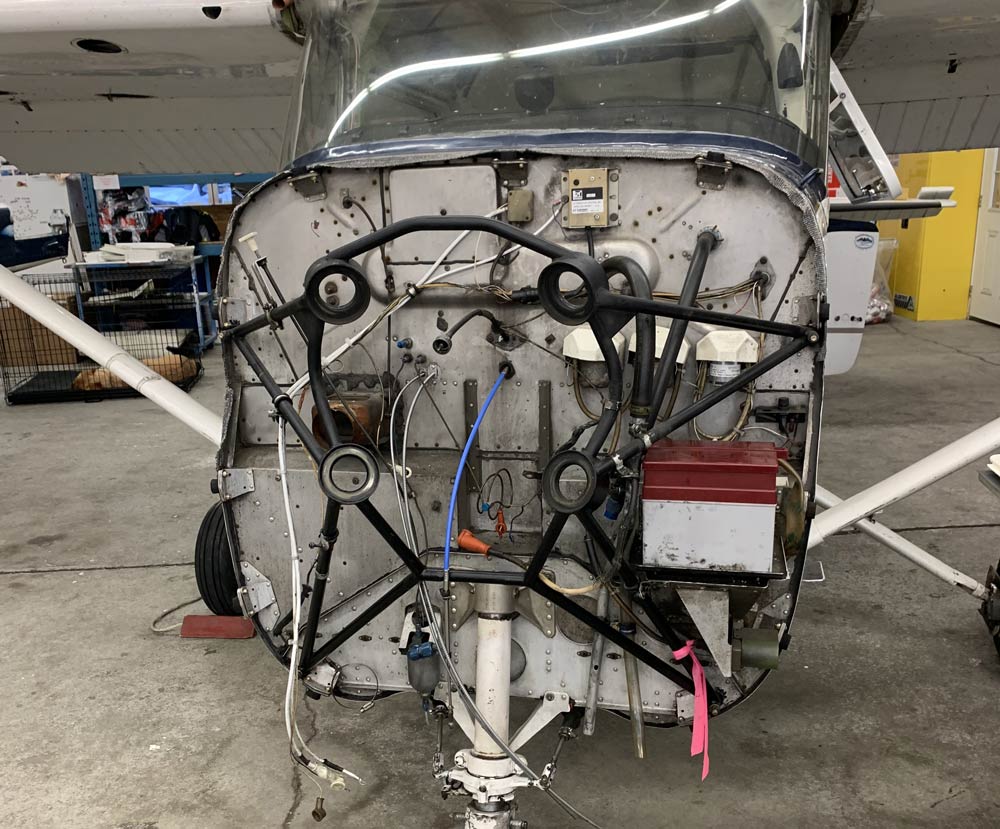
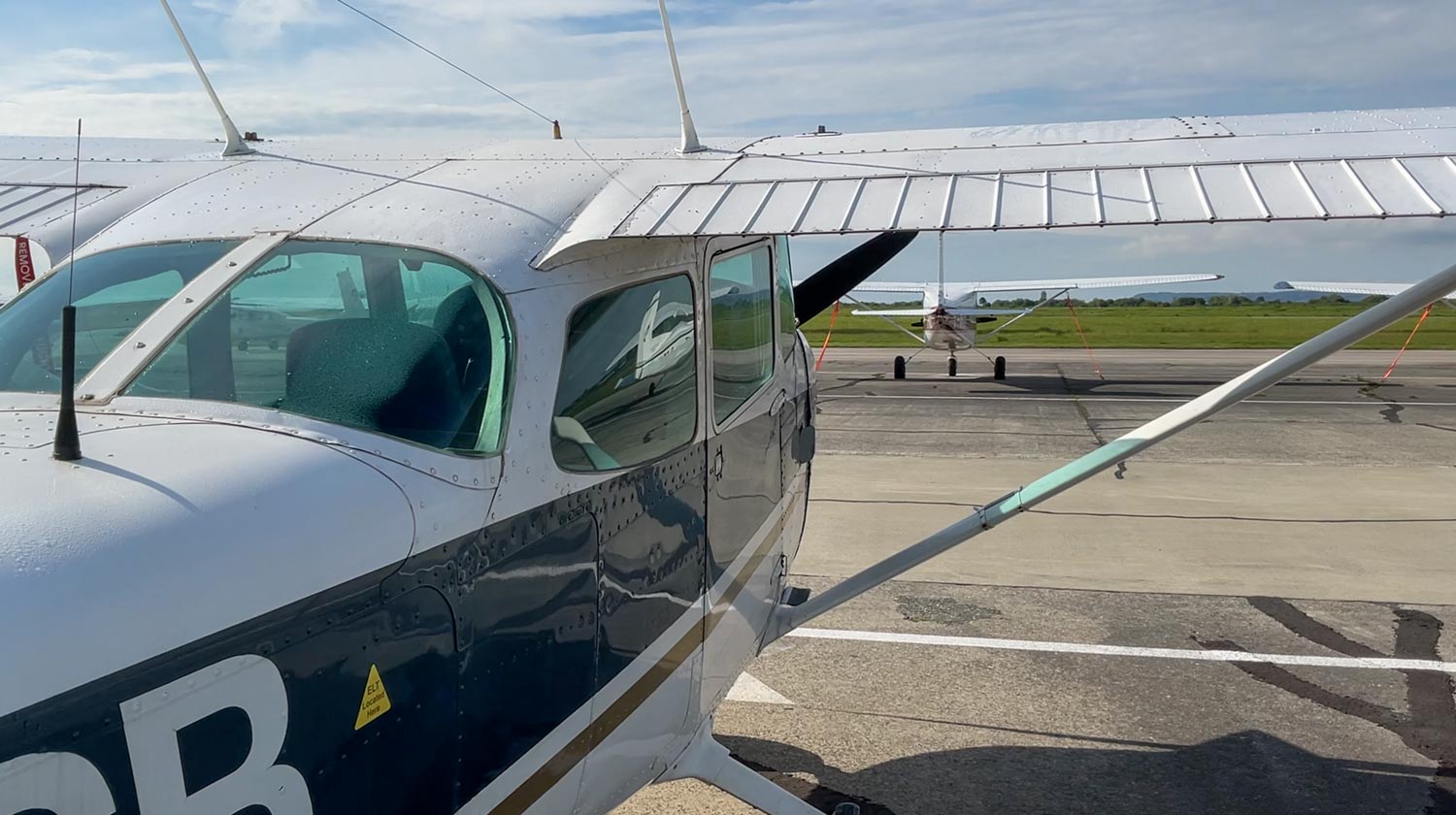
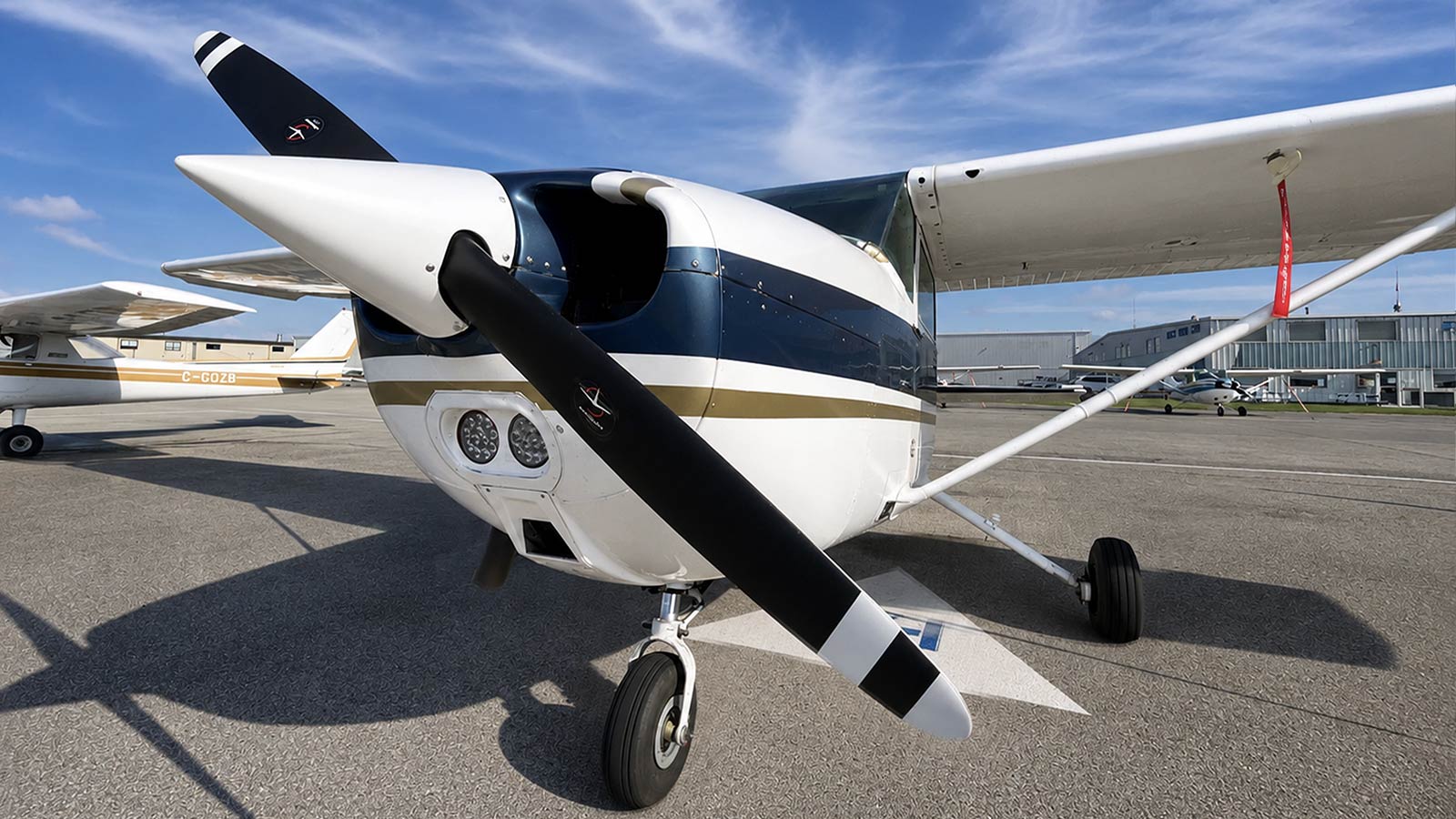
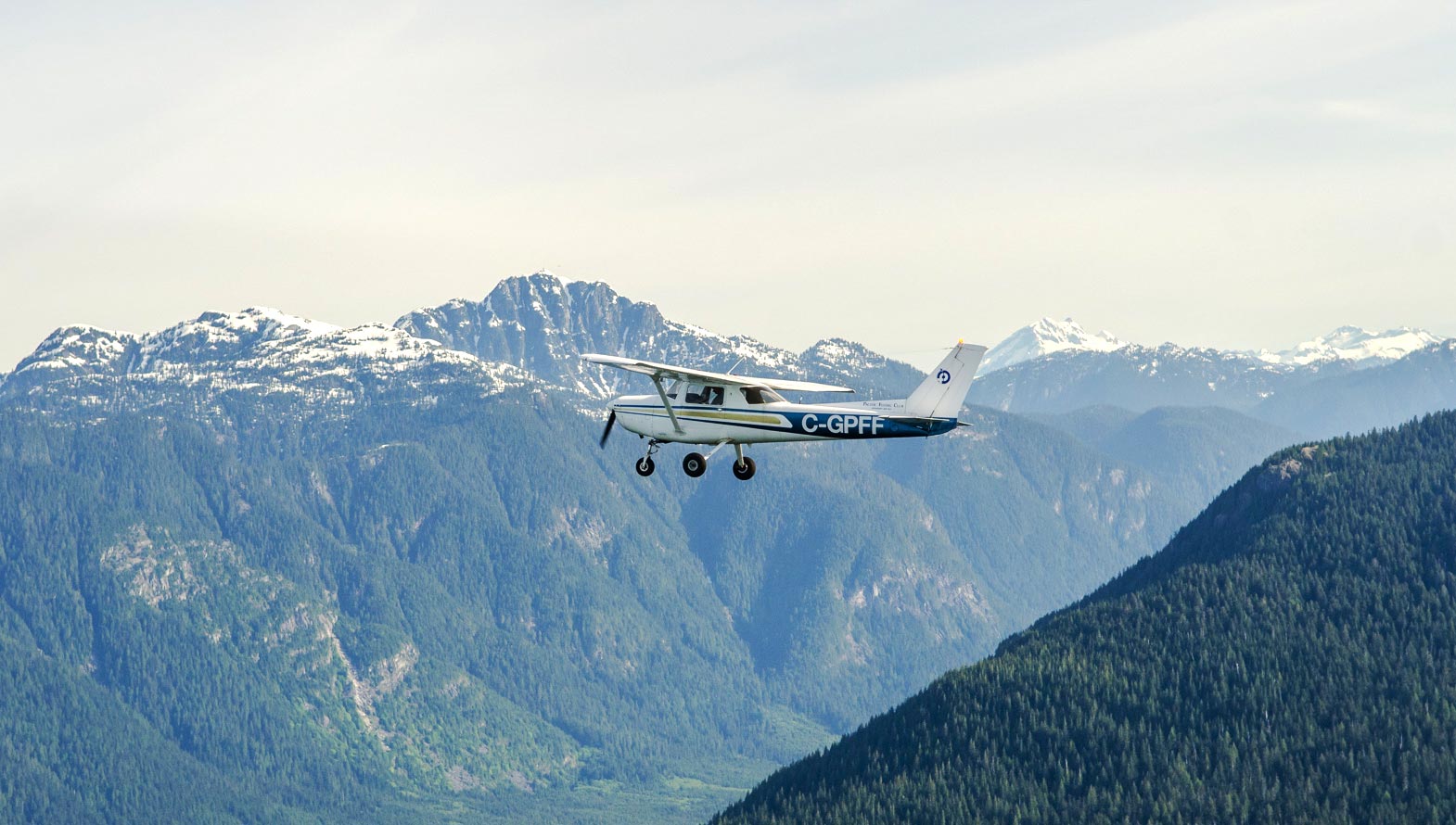
On every preflight, you open the small oil door on the cowling and pull the dipstick. For most students, that’s their first look at the Cessna 172 engine: a four-cylinder, air-cooled Lycoming whose basic design has changed very little in decades. All of Pacific Flying Club’s 152s and 172s fly on Lycoming power. In this fourth article in our technical series, we cover how the engine works, what its model name means, and why TBO and unleaded fuel have been in the aviation news this year.
How the Cessna 172 Engine Is Laid Out
The engine is horizontally opposed. Its four cylinders lie flat, two on each side of a central crankshaft. The opposing pistons balance each other, so the engine runs smoothly, and the flat shape keeps the nose low enough for a good view over the cowling.
There’s no gearbox. The propeller bolts directly to the crankshaft, so the tachometer shows engine and propeller RPM as the same number. That direct connection is why the Cessna 172’s fixed-pitch propeller behaves the way it does in climb and cruise.
The engine is also air-cooled, with no radiator or coolant. Air comes in through the front of the cowling, and baffles guide it over finned cylinders. Oil carries away a good share of the heat as well, which is one reason the oil check on every preflight matters.
Reading the Model Name
In Lycoming’s naming, O means opposed, and an I in front of it means fuel injected. The number is the displacement in cubic inches. An O-320 is a carbureted opposed engine of 320 cubic inches. An IO-360 is a fuel-injected opposed engine of 360 cubic inches. The suffix, such as -L2A, identifies the specific configuration.
The Engines in PFC’s Fleet
- Cessna 152: Lycoming O-235, carbureted, about 110 hp
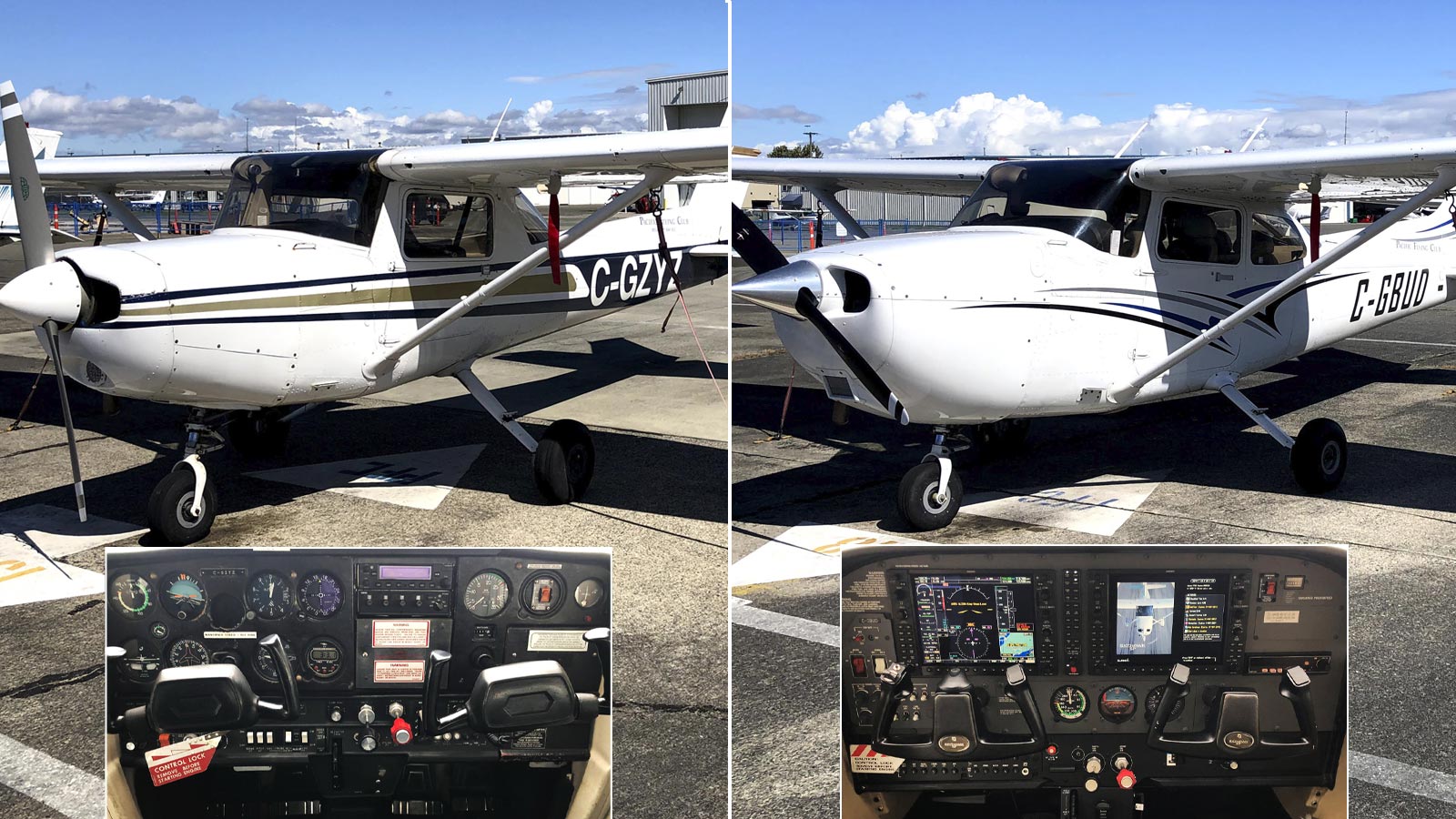
- Cessna 172P: Lycoming O-320, carbureted, 160 hp
- Cessna 172R: Lycoming IO-360-L2A, fuel injected, 160 hp
- Cessna 172SP: Lycoming IO-360-L2A, fuel injected, 180 hp
The R and SP use the same engine model. The SP gets its extra 20 horsepower from a higher maximum RPM. For a full comparison of the two airframes, see Cessna 152 vs 172.
Two of Everything: The Ignition System
Each cylinder has two spark plugs, fired by two separate magnetos. A magneto is an engine-driven generator that makes its own electricity for the plugs, so the engine keeps running even if the aircraft’s electrical system fails completely. If one magneto or set of plugs fails, the other keeps every cylinder firing.
Students meet this system during the run-up, when they check each magneto on its own and watch for a small RPM drop. The Pilot’s Operating Handbook (POH) sets the maximum acceptable drop. A drop that’s too large, or no drop at all, means taxiing back and talking to maintenance.
Carburetor or Fuel Injection
The 152 and 172P are carbureted. As air speeds up through a carburetor, it cools, and ice can form inside even on days well above freezing, especially in humid air like the Lower Mainland’s. That’s why these aircraft have a carburetor heat control, and why students learn to recognize the gradual RPM loss that can signal carb ice.
The 172R and SP are fuel injected. Fuel goes straight to each cylinder’s intake, so there’s no carburetor to ice up and no carb heat control. Hot starts take a slightly different technique, which is covered during the checkout. Both types have a red mixture control for leaning the engine as the aircraft climbs into thinner air.
What TBO Actually Means
TBO, or time between overhaul, is the manufacturer’s recommended number of operating hours before an engine is disassembled, inspected, and rebuilt. Lycoming lists the 152’s O-235 at 2,400 hours. The 172’s O-320 and IO-360 have long been listed at 2,000 hours