Why the High-Wing Layout Suits a Trainer
There are several practical reasons the high-wing configuration has stuck around on trainer aircraft specifically, beyond simply being a Cessna tradition.
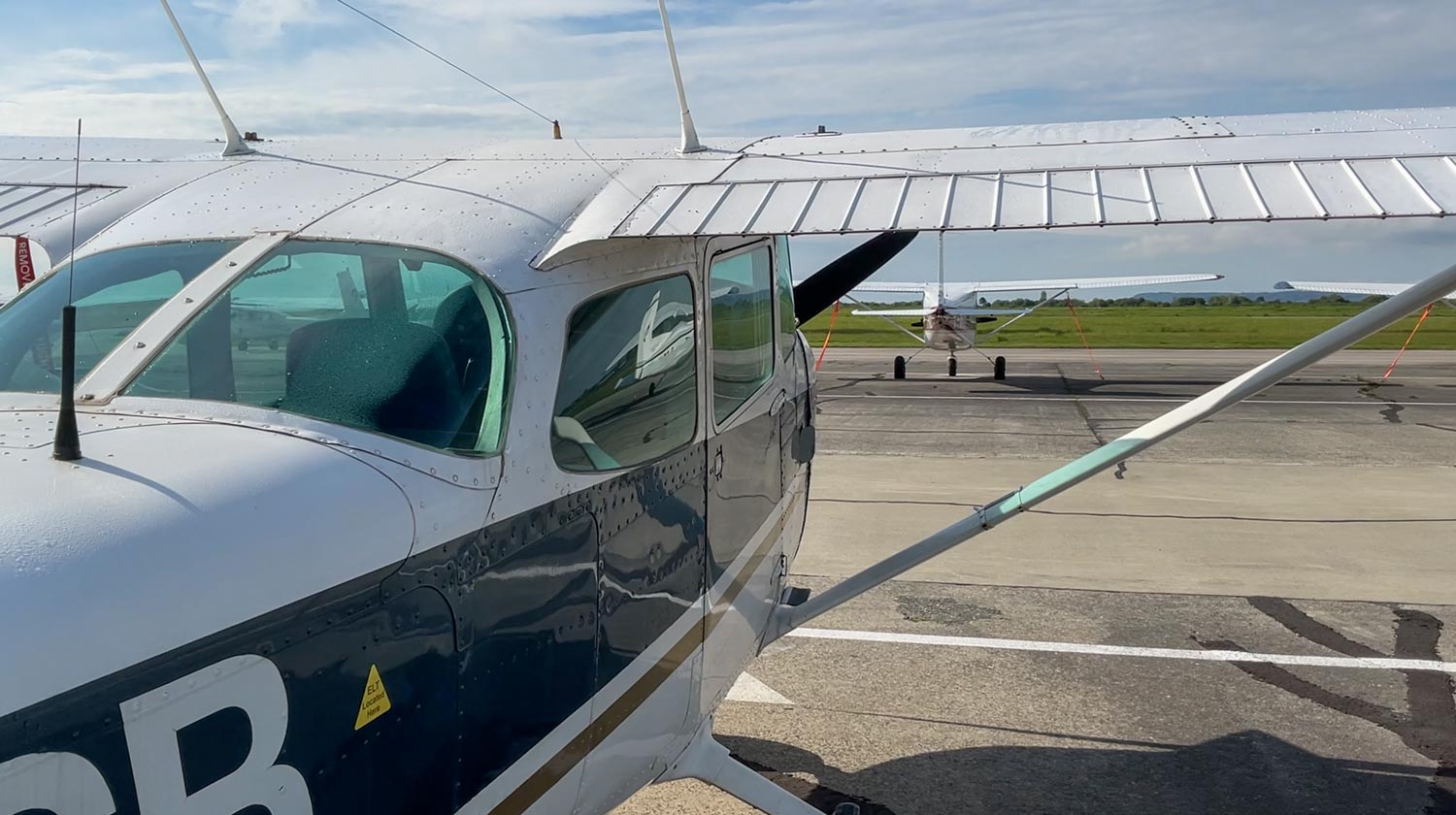
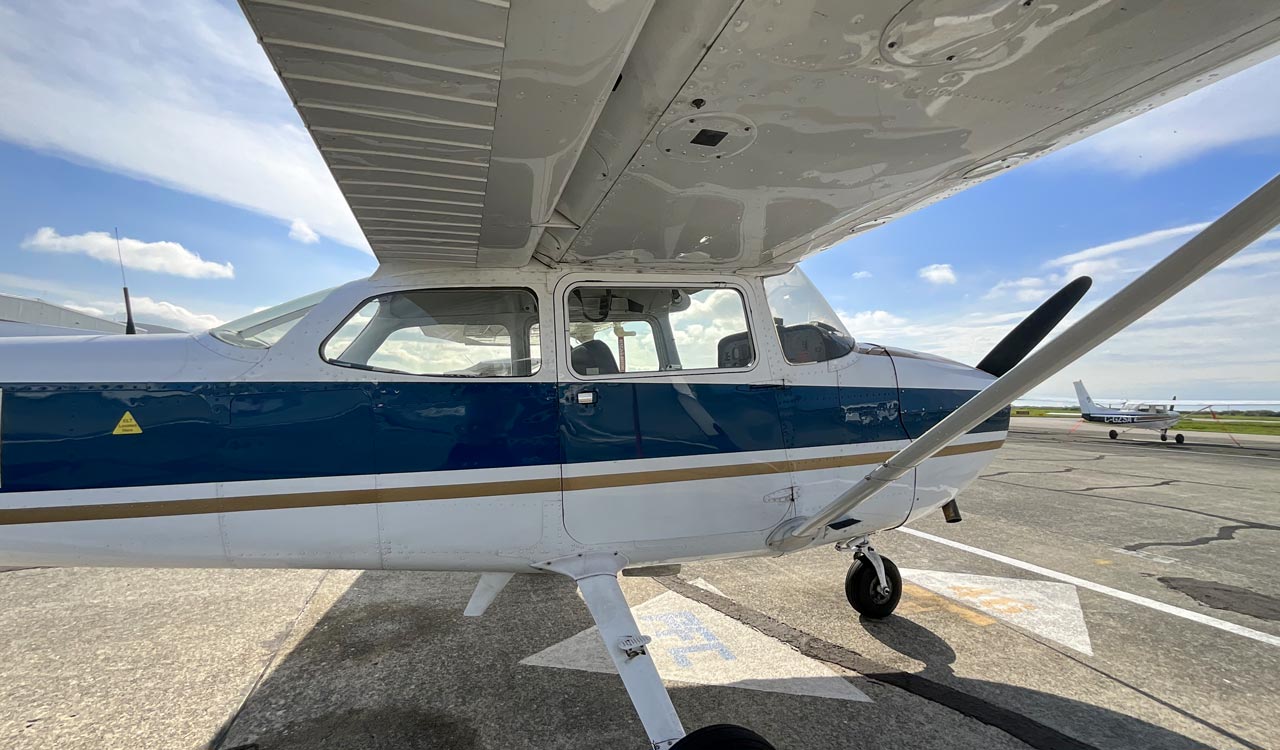
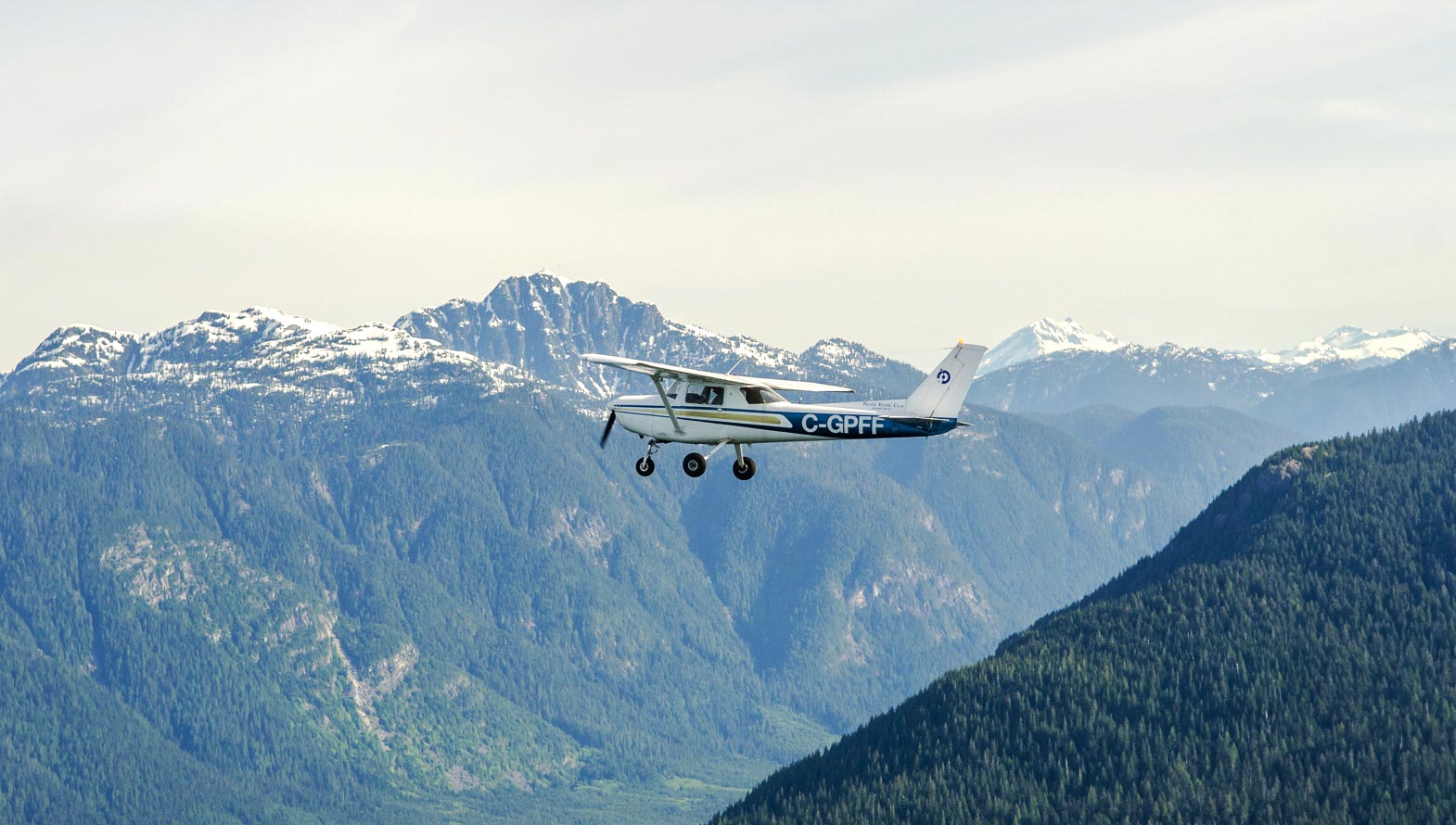
Downward visibility. With the wing above the cabin, students get a largely unobstructed view of the ground during turns, ground reference maneuvers, and the traffic pattern. This matters a great deal during early training, when a student is learning to judge altitude, position, and closure rate visually rather than by instruments alone. The trade-off is reduced upward visibility, since the wing can block the view of aircraft approaching from above — something instructors specifically train students to compensate for with clearing turns before climbs and turns.
Roll stability. A high-wing aircraft has an inherent tendency to return to wings-level flight after a disturbance, simply because of where the wing’s lift is generated relative to the aircraft’s center of gravity. That built-in stability is a genuinely useful trait in a trainer, since it gives a new student a bit more margin for error while they’re still developing a feel for coordinated flight.
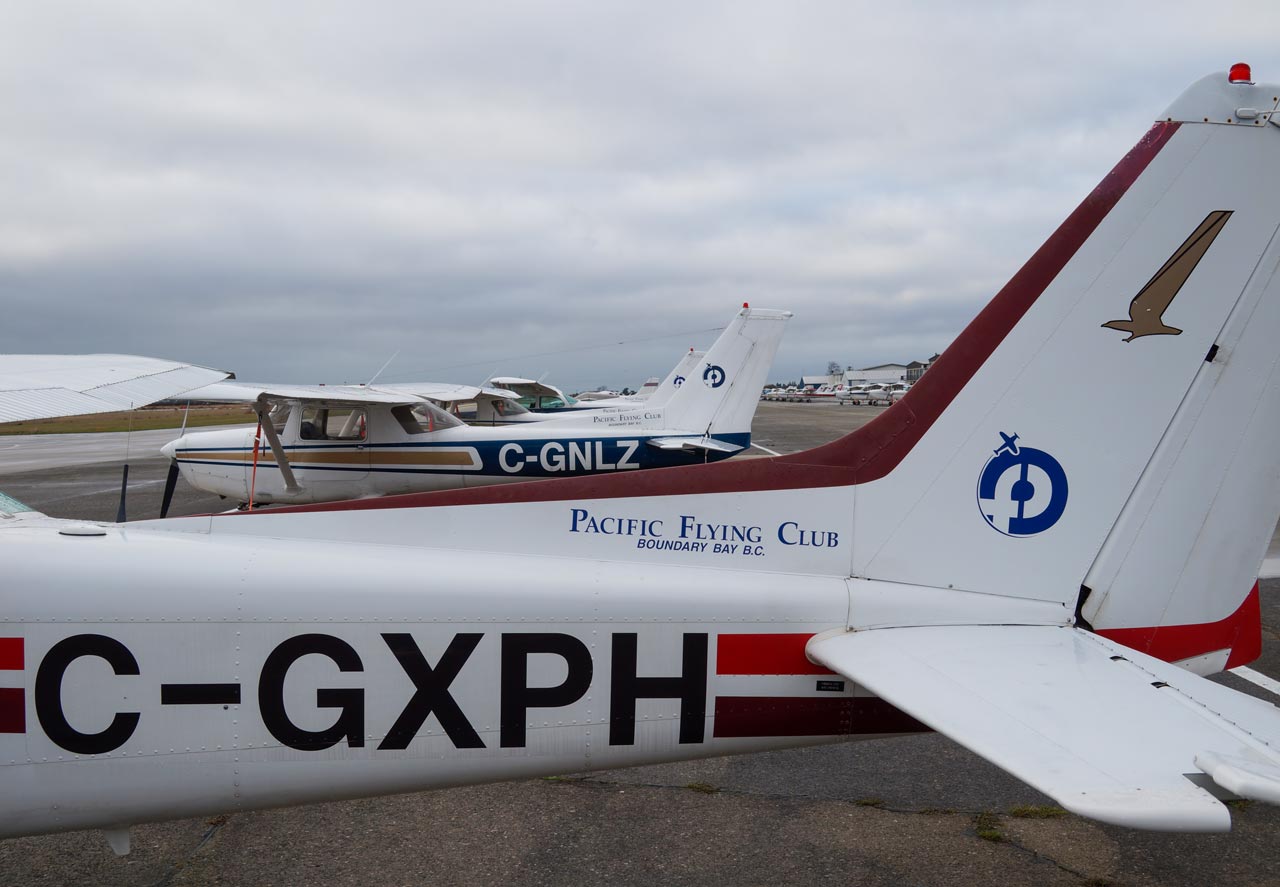
Ground clearance. With the wing, and by extension the fuel tanks and structure, sitting well above the ground, there’s more clearance for wingtip strikes during taxi and less concern about foreign object damage kicked up from the ramp or runway surface. This is a minor point on a paved airport like Boundary Bay, but it matters more broadly across the 172’s long history of operating from grass strips and unimproved fields.
Simple, gravity-fed fuel system. Because the fuel tanks sit in the wings above the engine, fuel can flow to the engine by gravity alone on most 172 models, without relying on an engine-driven or electric fuel pump as the primary source of fuel delivery. That’s one less system to fail, and one more example of how the high-wing layout supports the aircraft’s overall design philosophy of mechanical simplicity.
What This Means for a Student Pilot
Understanding why the aircraft is built this way isn’t just trivia — it directly explains habits students are taught early in training. Clearing turns before a climb exist specifically because the high wing can hide traffic above and behind the aircraft. Judging a turn to final by looking down and slightly behind the wing strut is a technique unique to strut-braced, high-wing aircraft, and it’s one reason the sightline in a 172 feels different from a low-wing aircraft during pattern work.
On preflight, the wing struts themselves are a specific inspection item that doesn’t exist on a cantilever aircraft. Students are trained to check the strut fittings at both the wing and fuselage attachment points for security, look for any signs of corrosion or elongated bolt holes, and confirm the strut fairings are intact. It’s a small but important part of the walk-around that’s worth understanding rather than just checking off a list.
Trivia: The Design Cessna Almost Replaced
In the late 1960s, Cessna actually built an aircraft intended to replace the 172 outright: the Cessna 177 Cardinal. The Cardinal used a cantilever wing with no struts at all, along with a steeply raked windshield, aiming to fix the exact visibility trade-off described above by giving pilots a clearer view upward and forward. Cessna was confident enough in the design that the 172 was briefly scheduled to be discontinued.
That plan didn’t survive contact with the market. Dealers and buyers who had grown accustomed to the 172’s handling and simplicity were skeptical of the Cardinal’s early handling quirks, and the 172 quietly kept selling in large numbers while the Cardinal struggled to find its footing. Cessna ultimately kept both aircraft in production for a time, but the 172 outlasted the Cardinal by decades and remains in production today in updated form, while the Cardinal was discontinued in the late 1970s. It’s a good reminder that a technically “improved” design doesn’t always win out over one that’s simple, well understood, and already trusted by the people flying it.
Seeing the High-Wing Advantage for Yourself
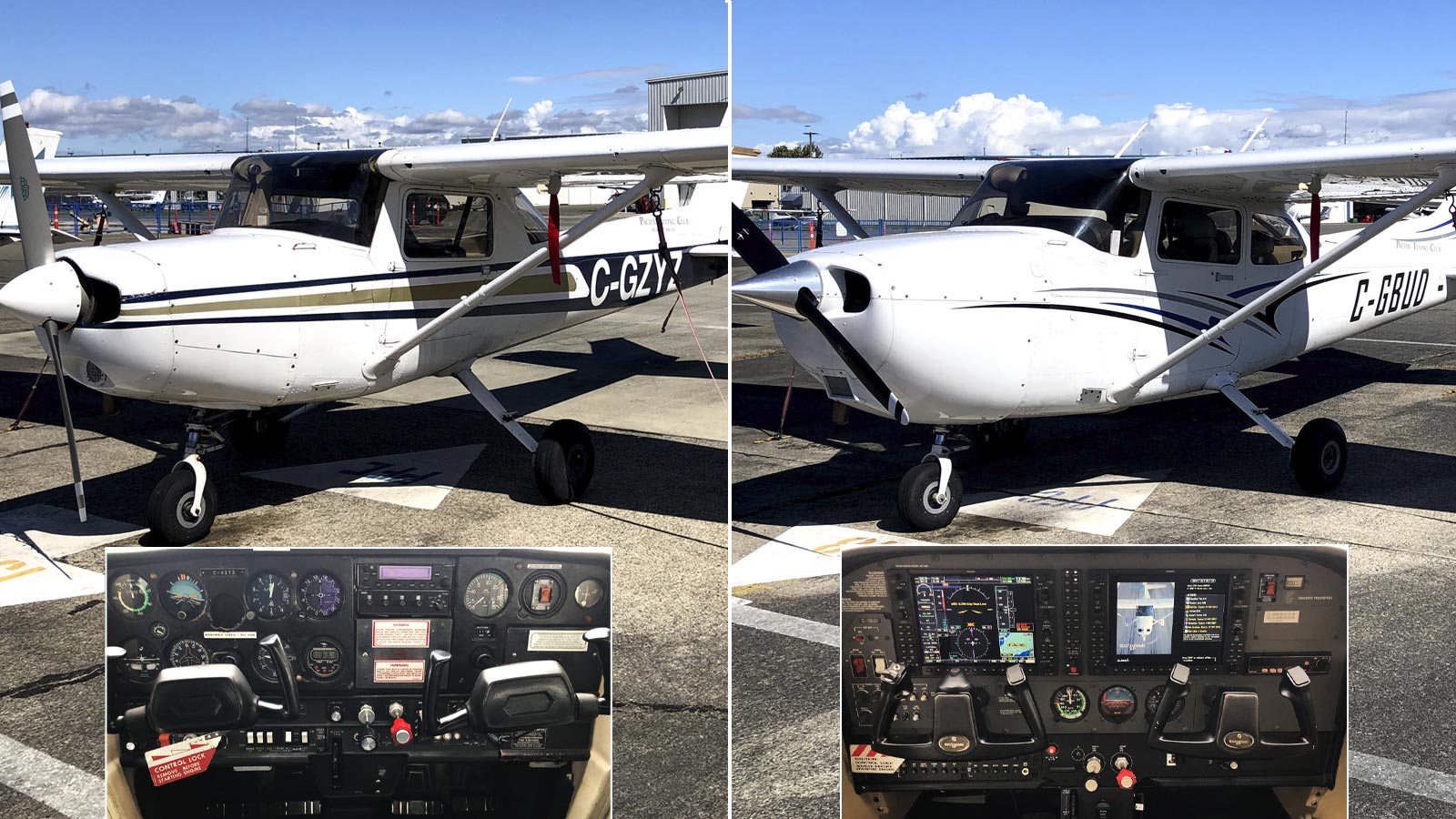
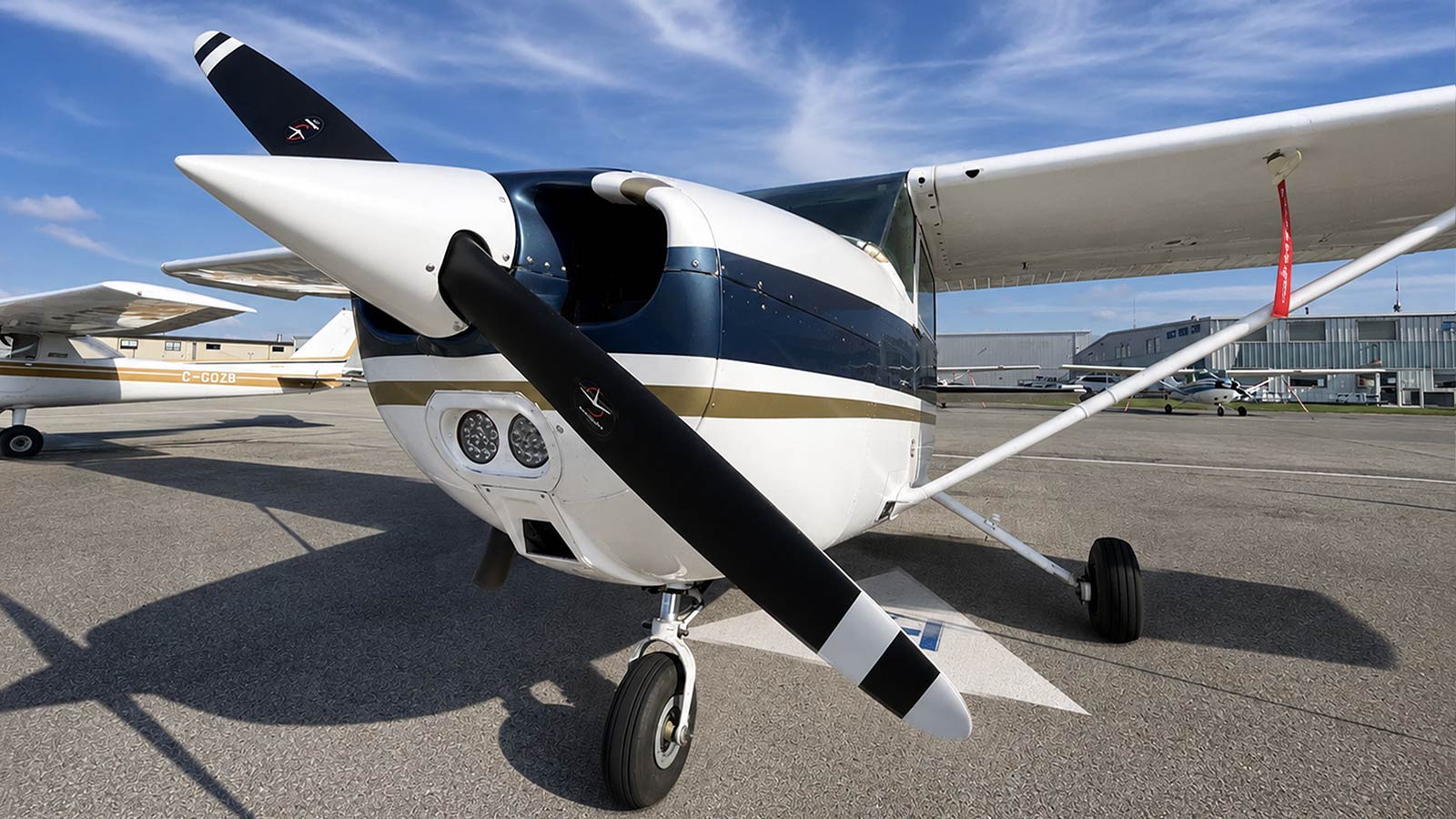
Reading about visibility and roll stability is one thing; noticing how much of the ground stays in view during your first turn in the pattern is another. If you’d like to see how the 172’s high-wing design feels in the air, our Cessna 172 fleet page has more on the aircraft PFC students train on at Boundary Bay. And if you’re curious about another piece of what makes the 172 tick, our earlier article on the 172’s fixed-pitch propeller covers the same kind of practical, under-the-skin detail from a different angle.