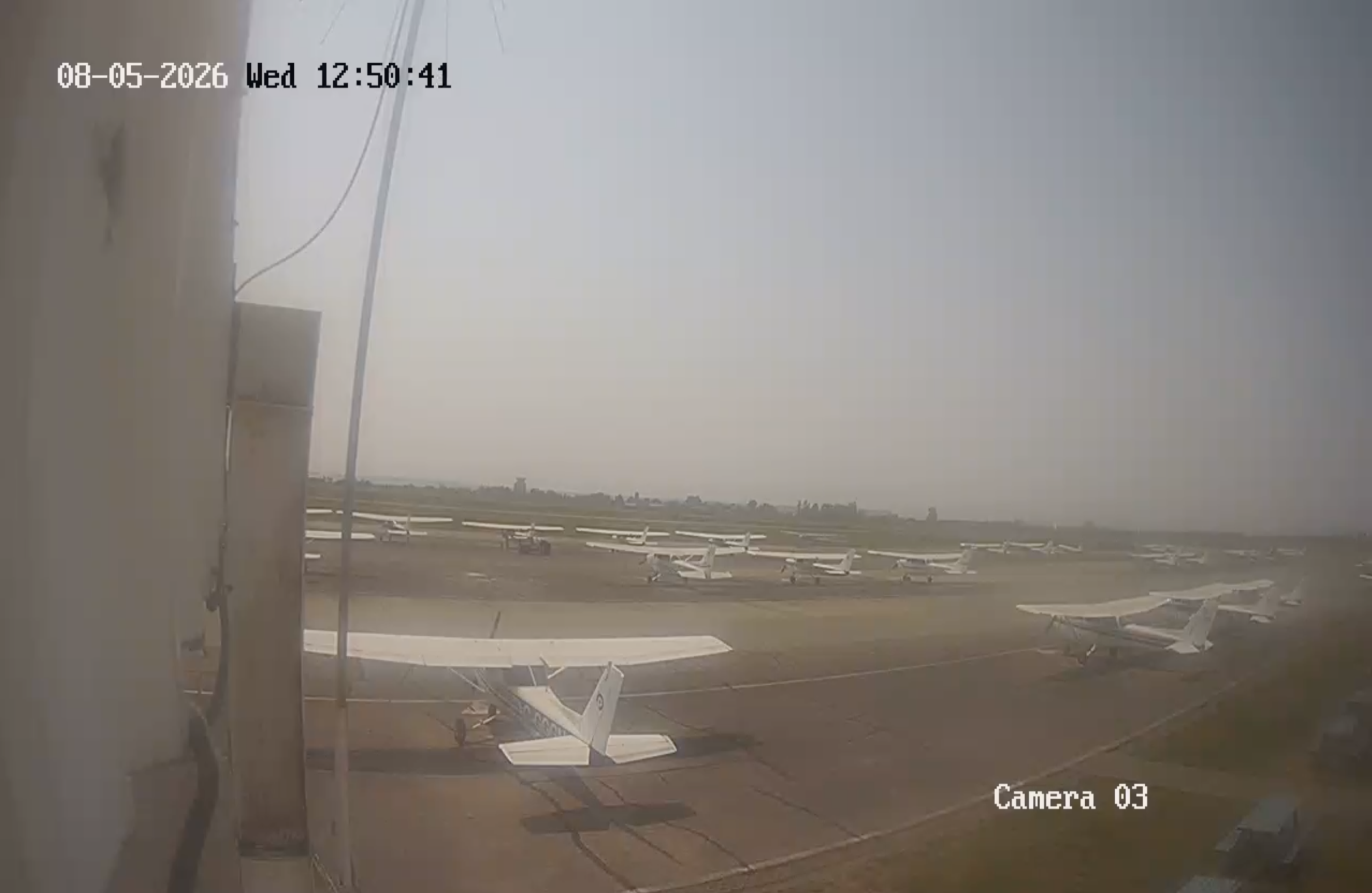
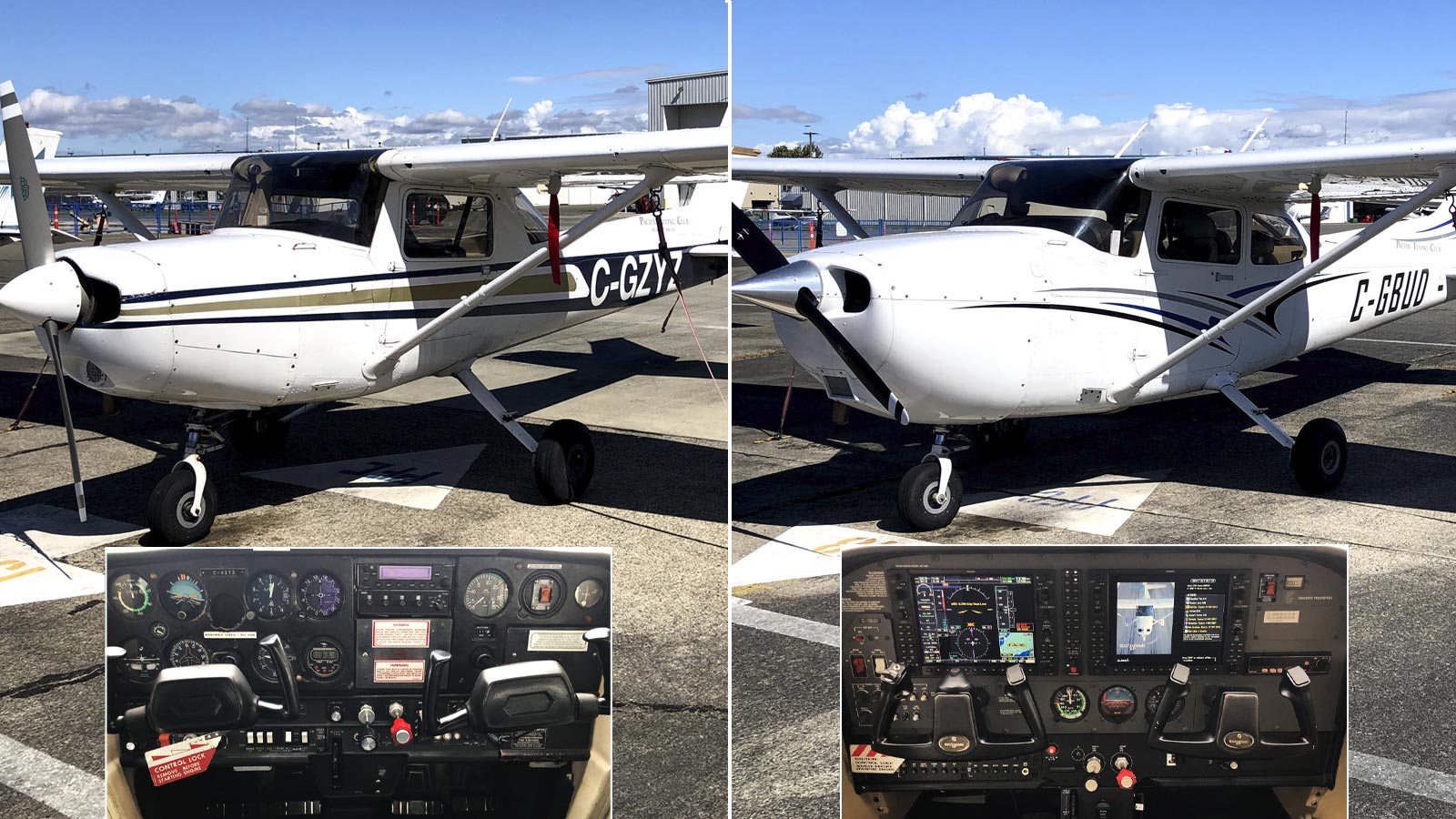
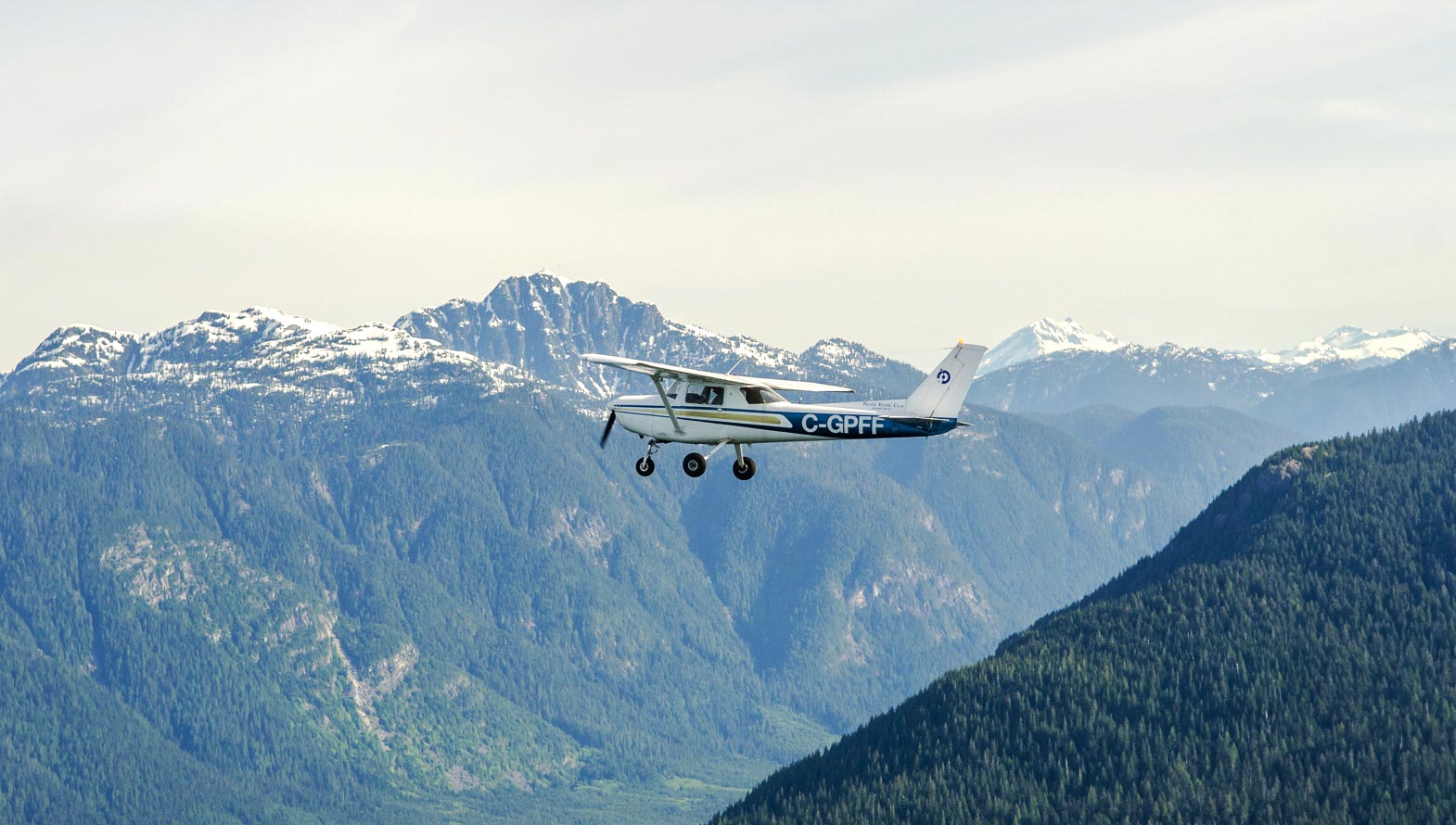
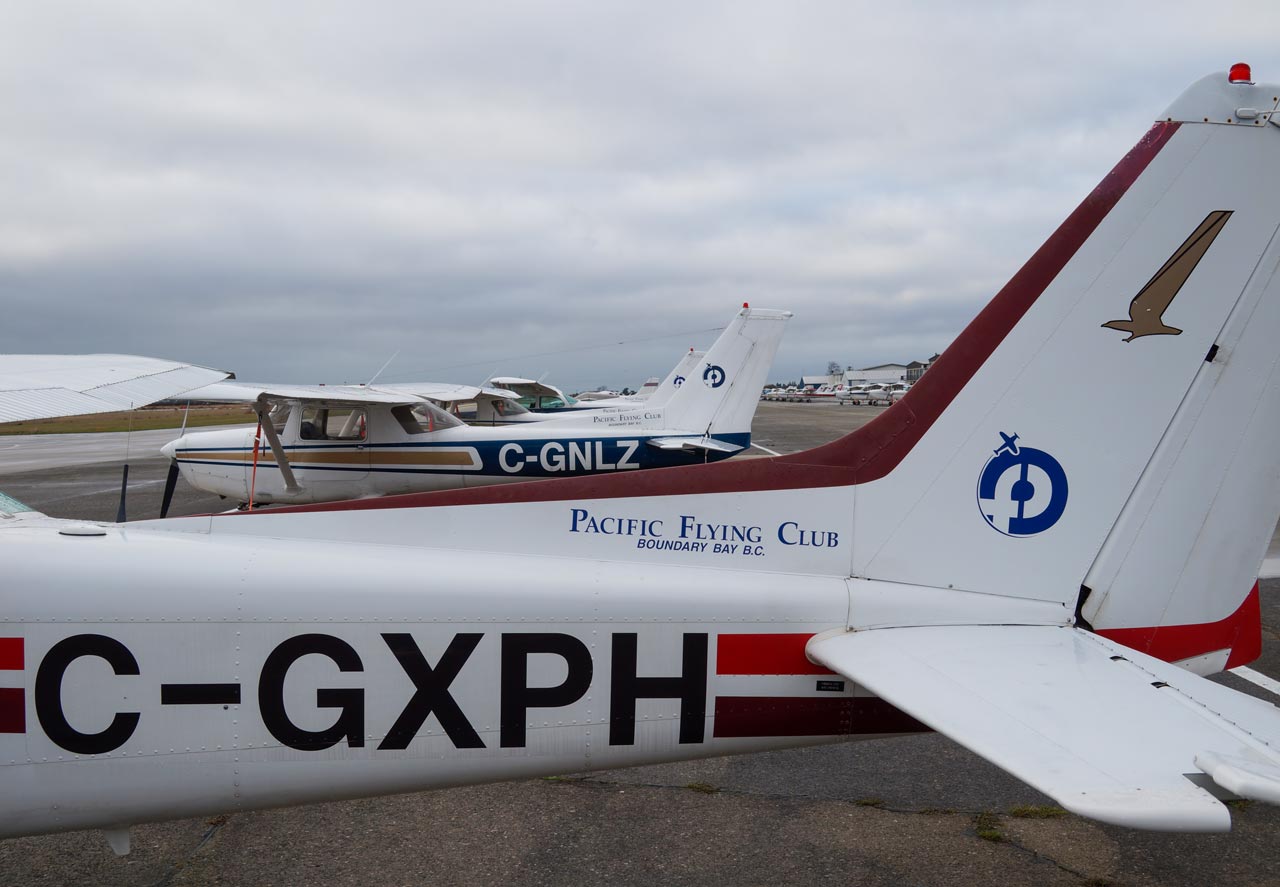
If you’ve been in Metro Vancouver over the past few weeks, you’ve probably noticed the sky isn’t quite the colour it should be. BC’s 2026 wildfire season has been active, with smoke from fires around Pemberton, Vernon, Boston Bar, and Clinton drifting into the Lower Mainland and affecting air quality as far south as Delta. For most people, that means checking an air quality app before deciding whether to go for a run. For a flight school, it means something more specific: smoke changes what a pilot can actually see, and that has a direct effect on whether a lesson happens as planned.
At Pacific Flying Club, wildfire smoke is a normal, if unwelcome, part of a BC summer. It’s not something instructors treat as an emergency, but it is something they take seriously, because visibility is one of the most basic requirements for safe visual flight. Here’s how smoke actually affects training, how PFC makes the call on a hazy day, and what it teaches student pilots that goes well beyond July and August.
Why Smoke Is a Different Problem Than Fog or Low Cloud
Most new students already have some intuition for how fog or low cloud affects flying. Smoke behaves differently, and that difference matters. Fog and cloud are made of water droplets, which tend to sit in defined layers with a relatively clear ceiling above or below them. Wildfire smoke is made up of fine particulate matter that can spread through a much deeper layer of the atmosphere, and it doesn’t always look as dramatic from the ground as it does from the air.
This is one of the more counterintuitive parts of flying in smoke: a day can look reasonably clear when you’re standing on the ramp, and still produce poor slant visibility once you’re airborne and looking toward the horizon rather than straight up. Horizontal haze from smoke reduces the distance a pilot can see landmarks, other traffic, and terrain, even when the reported visibility at the airport itself seems acceptable. Smoke can also drift and settle unevenly, so conditions ten or twenty miles from Boundary Bay may be noticeably worse, or better, than what’s visible from the field.
There’s an added factor specific to active fire areas: Transport Canada and NAV CANADA can establish temporary flight restrictions around a wildfire to protect airtankers, helicopters, and other aircraft working the fire. These restrictions don’t typically affect training in the Boundary Bay local area, but they’re a good reminder that a proper weather and NOTAM briefing matters even more during fire season than usual.
How PFC Makes the Go/No-Go Call on a Smoky Day
The decision to fly, delay, or cancel a lesson because of smoke isn’t different in principle from any other weather-related go/no-go call. It comes down to whether conditions meet VFR visibility minimums and whether an instructor is confident a student can safely see and avoid other traffic, identify the horizon, and navigate visually for the planned lesson.
In practice, that means checking current visibility and forecast trends before a lesson, watching how smoke is moving through the day, and staying in touch with students whose lessons might be affected. PFC’s live weather cameras at the field give a real-time look at conditions before anyone drives out to Boundary Bay, which is a small thing that saves a lot of wasted trips on a genuinely marginal day.
If visibility is below minimums, or trending that direction, a lesson may be shortened, rescheduled, or swapped for ground school or simulator time instead of being cancelled outright. That flexibility is deliberate. Smoke tends to be a daily and even hourly variable rather than a multi-day washout, so the goal is to keep training moving whenever it’s genuinely safe to do so, rather than writing off an entire day at the first sign of haze.
What This Teaches Student Pilots About Weather Judgment
It’s tempting to treat smoke as an inconvenience that simply interrupts a training schedule. A more useful way to think about it is as one more real example of the kind of judgment flight training is actually built around. This connects directly to the same theme covered in PFC’s articles on weather delays in flight training and pilot fatigue: the skill being developed isn’t just stick-and-rudder proficiency, it’s the ability to read a set of conditions honestly and make the right call, even when that call is inconvenient.
A student who has never had to reschedule around smoke, wind, or low cloud hasn’t yet had the chance to practice that judgment. Learning to recognize when visibility is marginal, understanding why a “clear-looking” day might still be below minimums, and getting comfortable with an instructor’s decision to delay a lesson are all part of building the same decision-making habits that matter for the rest of a flying career. Every pilot, at every level, eventually has to say no to a flight that looks fine on the surface but isn’t. Smoke season is simply one of the more visible ways BC students get early practice at that.
Preparing for a BC Flying Season That Includes Smoke
Wildfire smoke isn’t going away as a seasonal feature of flying in this province, so it’s worth building a few habits around it early in training. Checking the Air Quality Health Index (AQHI) alongside a standard weather briefing gives a useful sense of how bad conditions are likely to be on a given day, even though AQHI is a health tool rather than an aviation visibility product. For actual flight planning, a proper briefing through NAV CANADA’s flight planning service remains the right source for current visibility, TAFs, and any NOTAMs related to nearby fire activity. Students can also keep an eye on the BC Wildfire Service dashboard for a broader sense of where active fires and smoke sources are across the province.
The practical takeaway for anyone training through a BC summer is that some schedule flexibility in July, August, and into September is normal, not a sign that something has gone wrong. It’s a manageable part of coastal training, and it’s one more condition PFC instructors are experienced at working around safely.
If you’re exploring flight training and want to understand how a school actually handles real BC weather, not just the easy, clear-sky days, that’s a conversation worth having early. You can learn more about getting started with private pilot training at Pacific Flying Club, or book a familiarization flight to see Boundary Bay’s flying environment for yourself.