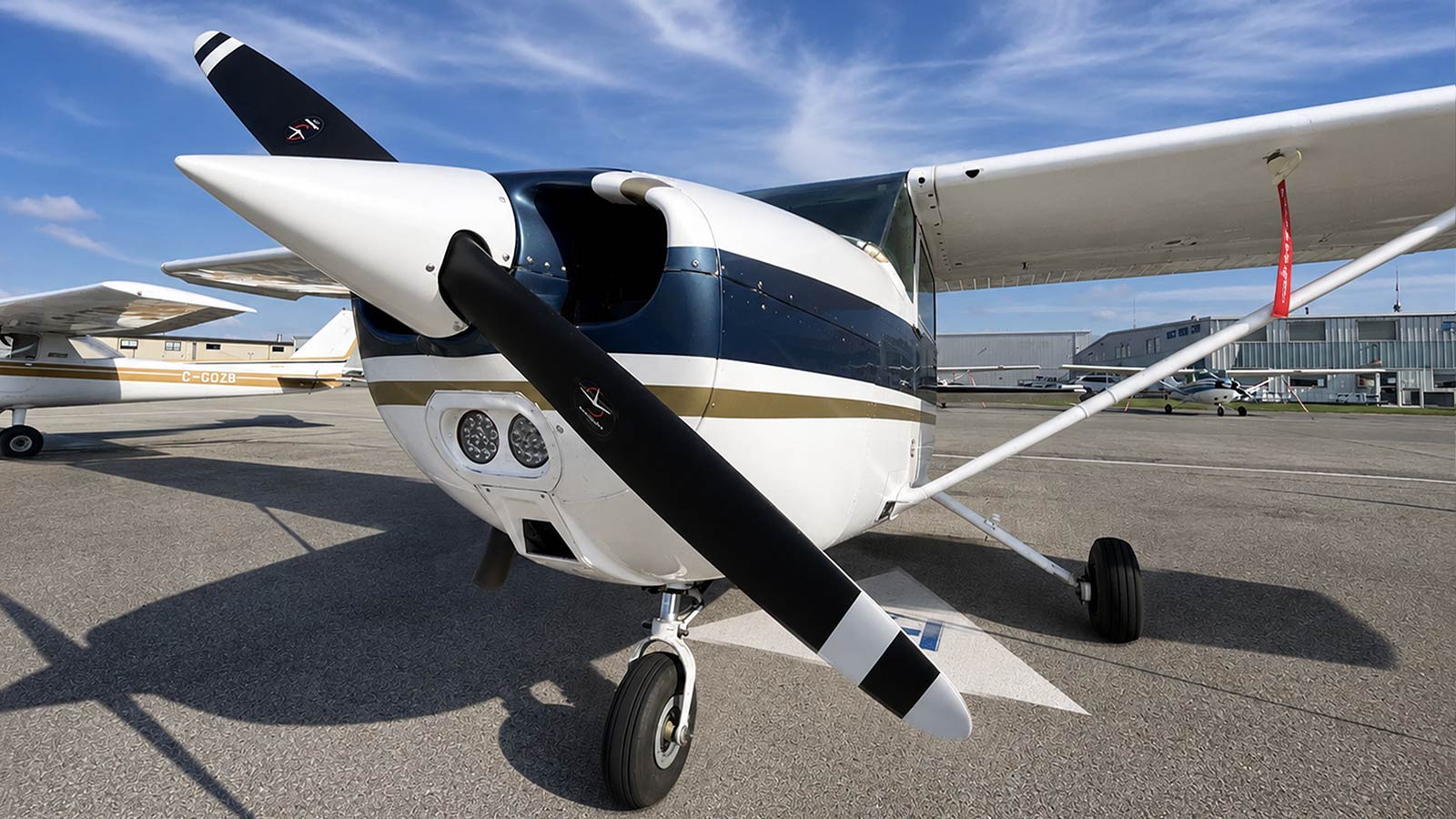
If you’ve ever done a preflight walk-around on a Cessna 172, you’ve run your hand along the propeller without necessarily thinking much about it. It’s just there — two aluminum blades bolted to the front of the engine, spinning at whatever RPM the throttle and airspeed happen to produce. That simplicity is not an accident. The Cessna 172, like most piston trainers, uses a fixed-pitch propeller, and the reasons behind that choice say a lot about why the 172 has remained the standard trainer for decades.
What “Fixed-Pitch” Actually Means
A propeller’s pitch refers to the angle of its blades relative to the plane in which they rotate. That angle determines how much air the propeller “bites” with each revolution, similar to how the gears on a bicycle change how much distance you cover per pedal stroke.
On a fixed-pitch propeller, that blade angle is set once, at the time of manufacture, and it cannot be changed in flight. There’s no lever in the cockpit to adjust it. Whatever angle the blades were built with is the angle they’ll have for the life of the propeller, aside from very occasional repitching done by a maintenance shop on the ground.
This is different from a constant-speed propeller, found on more complex aircraft, where a governor automatically adjusts blade angle in flight to hold a selected RPM regardless of airspeed or power setting. On a constant-speed prop, a pilot manages two separate controls — throttle and propeller — and the propeller does the work of finding the most efficient angle for the current phase of flight. On a fixed-pitch propeller like the one on a 172, there’s only the throttle. RPM simply follows whatever the engine and airflow dictate.
A Real-World Example: The 172’s McCauley Propeller
Most Cessna 172s in service today, including later Skyhawk models, are fitted with a two-blade McCauley fixed-pitch propeller with a diameter around 76 inches. The exact model number and pitch angle vary somewhat depending on the specific 172 variant and engine installed — Cessna updated the propeller specification a handful of times over the 172’s long production history, particularly when the aircraft moved from the Continental O-300 engine to the Lycoming O-320 in the late 1960s. What hasn’t changed is the underlying concept: one blade angle, no moving parts to adjust it, and a propeller that’s tuned to work reasonably well across the whole flight envelope rather than optimally at any single point in it.
Why the 172 Uses This Design
There are a few straightforward reasons a training aircraft like the 172 sticks with a fixed-pitch propeller rather than a constant-speed unit.
Fewer moving parts. A constant-speed propeller relies on a hydraulic governor, oil pressure routed through the crankshaft, and a pitch-change mechanism in the propeller hub. A fixed-pitch propeller has none of that. It’s essentially a shaped piece of metal bolted to the engine. Fewer components means fewer things that can fail, and fewer things that need periodic inspection or overhaul.
Lower cost to purchase and maintain. For a flight school running aircraft through daily lesson blocks, maintenance simplicity has a direct effect on how often an aircraft is available to fly rather than sitting in the hangar. Fixed-pitch propellers are less expensive to buy, and the absence of a governor and pitch-change mechanism removes an entire category of scheduled maintenance and potential squawks.
One less control to manage while learning to fly. A new student already has enough to think about — airspeed, altitude, heading, radio calls, and the basic mechanics of controlling the airplane. Removing the propeller control lever from the equation means a student can focus entirely on stick-and-rudder skills during their earliest lessons, without also learning to manage engine RPM independently of throttle position.
The Trade-Off: Climb Performance vs. Cruise Performance
Every fixed-pitch propeller is a compromise, and that’s worth understanding rather than glossing over. Because the blade angle can’t change, the manufacturer has to pick one angle that works reasonably well across different phases of flight — takeoff, climb, and cruise — rather than being ideal for any single one of them.
A propeller pitched more toward climb performance will produce strong acceleration and a good rate of climb, but won’t be as efficient at higher cruise speeds. A propeller pitched more toward cruise performance will get better fuel economy and speed once level and stabilized, but will feel comparatively sluggish off the runway. The 172’s stock propeller sits somewhere in between, favoring reasonable climb performance since that matters more in a training environment with frequent circuits and short-field practice.
This is also why RPM behaves differently on a 172 than it might on an aircraft with a constant-speed propeller. During the takeoff roll, RPM builds as the aircraft accelerates. During climb, RPM settles into a fairly steady value. During cruise, if the pilot reduces power, RPM drops along with airspeed, since the propeller has no way to hold a target RPM independently — it simply reflects the combination of engine power and the aircraft’s speed through the air.
What This Means for a Student Pilot
Understanding the fixed-pitch propeller now sets up an easier transition later, particularly for students working toward a Commercial Pilot Licence, since many complex and high-performance aircraft used at that stage of training are equipped with constant-speed propellers. Having a clear mental model of how RPM and blade angle interact on a simple system makes the constant-speed endorsement much more intuitive when it comes up.
On preflight, a fixed-pitch propeller still deserves close attention. Students are trained to check for nicks, cracks, or erosion along the leading edge, since even small imperfections can create stress points at operating RPM. The spinner and mounting hardware should be checked for security, and any oil staining near the hub investigated. None of this changes because the propeller is fixed-pitch — if anything, because there’s no governor to mask a developing issue, a careful visual inspection matters just as much.
Trivia: A Century-Old Design Choice That’s Still the Default
Constant-speed propellers have existed since the 1930s, yet the majority of piston trainers flying today, worldwide, still use fixed-pitch propellers. That’s not because the technology hasn’t improved — it’s because fixed-pitch propellers remain the most sensible match for the mission. A training aircraft doesn’t need to optimize performance at every altitude and airspeed the way a long-range cross-country aircraft might. It needs to be reliable, affordable to operate, and simple enough that a student can focus on learning to fly rather than managing a second engine control. For a deeper technical breakdown of how fixed-pitch and constant-speed propellers compare, AOPA has a good technical overview worth reading.
Getting Familiar With the 172 in Person
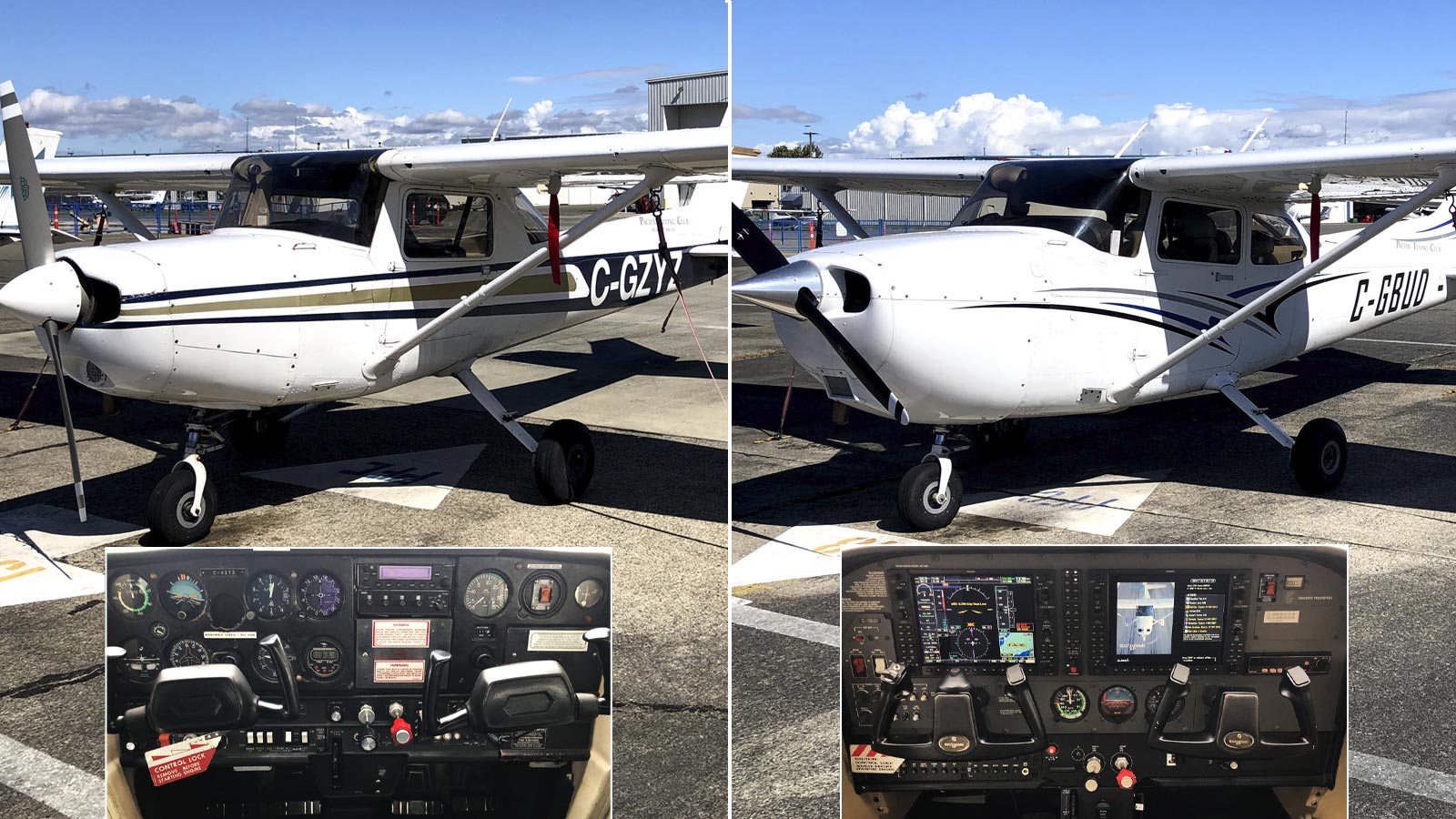
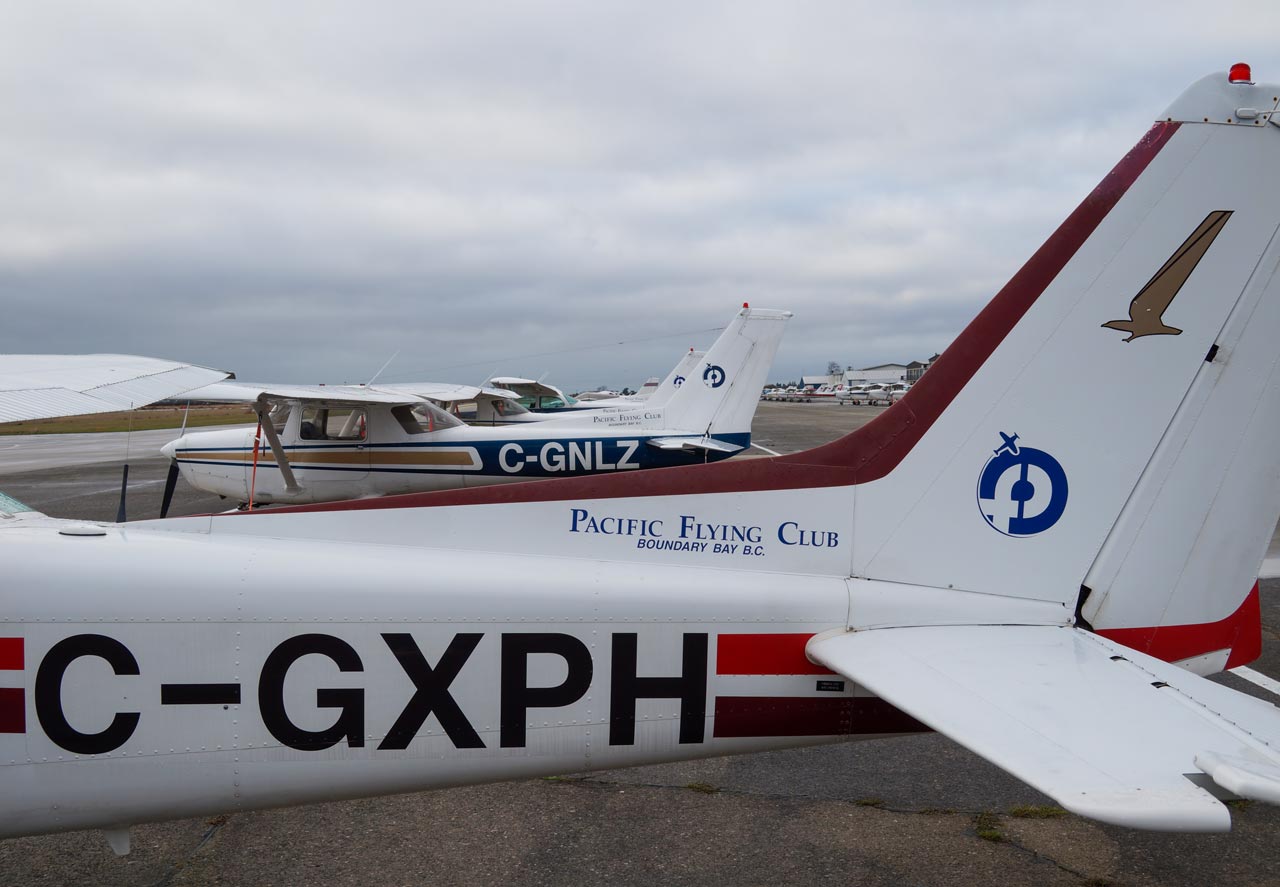
Reading about a fixed-pitch propeller is one thing — hearing how RPM responds to throttle changes during an actual climb-out is another. Pacific Flying Club operates a fleet of Cessna 172s at Boundary Bay Airport, and students get hands-on familiarity with exactly this kind of system from their very first lesson. You can see the current 172 fleet on our Cessna 172 fleet page, and if you’re curious how the panel side of things compares between older and newer aircraft, our article on glass cockpits vs. traditional gauges is a natural next read.