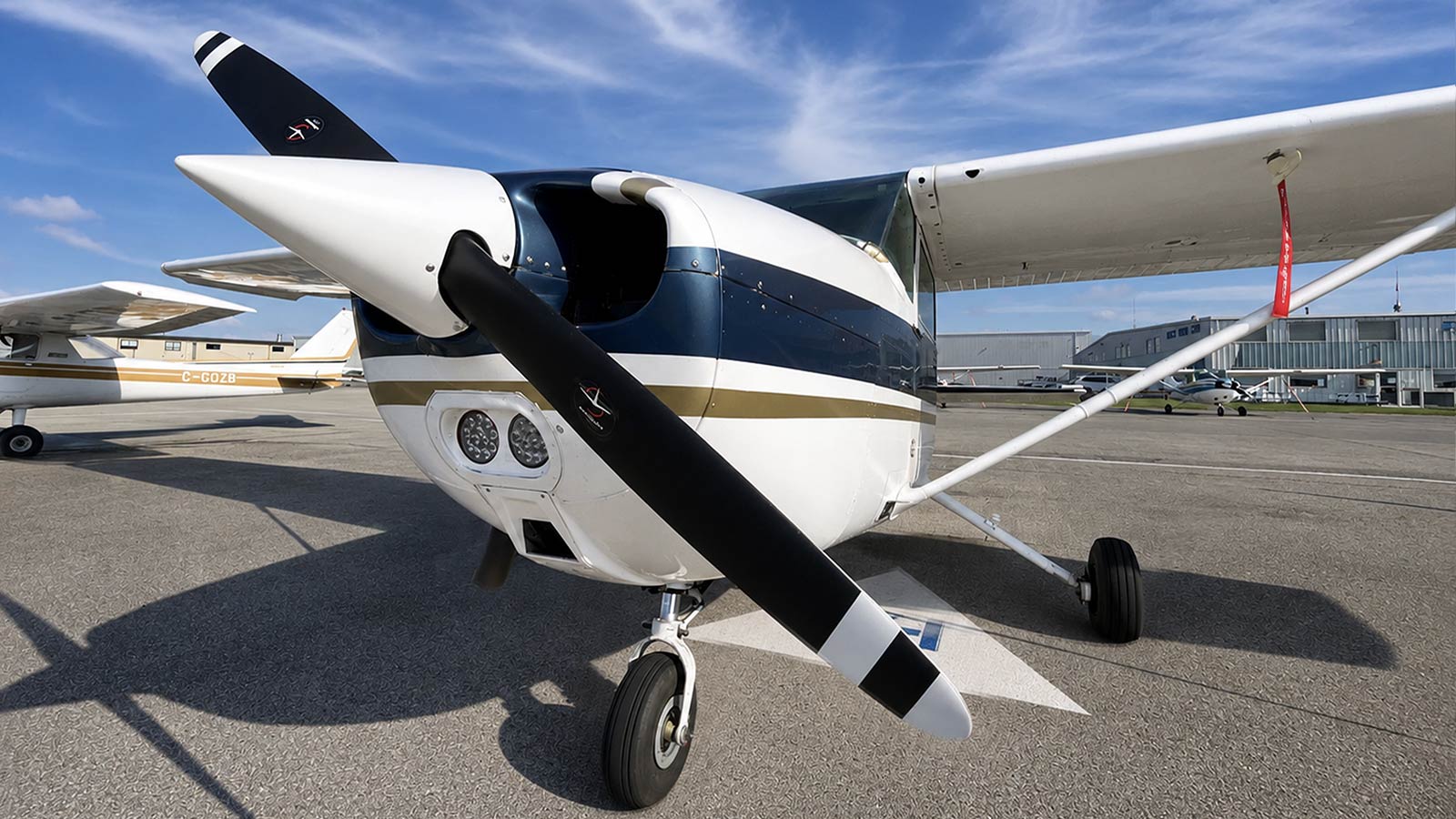
Every preflight includes a few minutes with a clear plastic fuel tester, draining samples from under the wings and holding each one up to the light. Those checks are the main protection against the most common fuel problems in light aircraft. The Cessna 172 fuel system is simple by design, and knowing how it works makes the reason for each check much clearer. This fifth article in our technical series covers how fuel gets from the tanks to the engine in PFC’s 152s and 172s, what the cockpit controls do, and why water in the fuel needs extra attention during the wet months at Boundary Bay.
How the Cessna 172 Fuel System Works
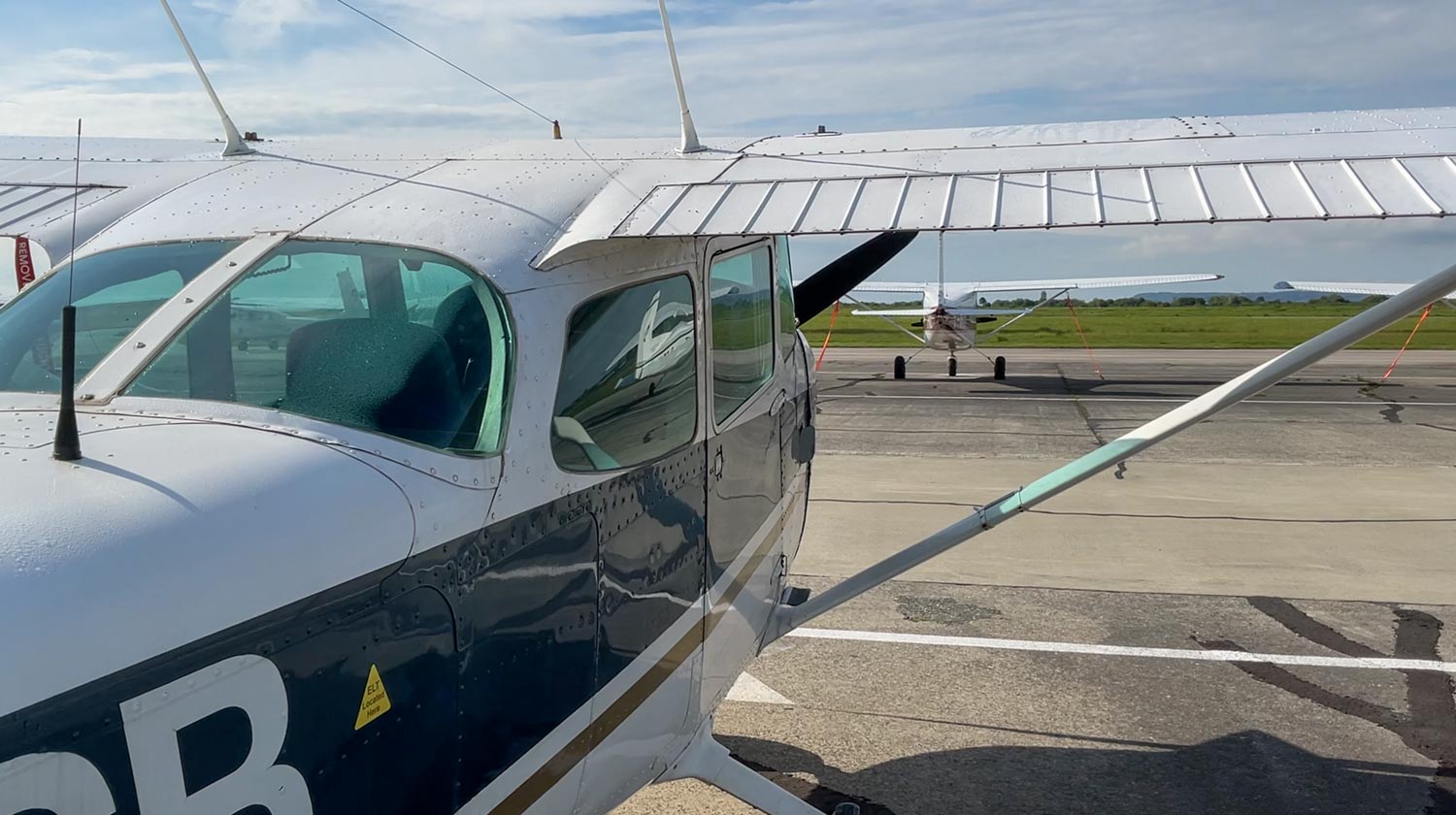
The 172 carries fuel in two tanks, one in each wing. Because the wings sit above the cabin, the tanks are higher than the engine and gravity does most of the work. This is one of the practical advantages of the Cessna 172’s high-wing design. Many low-wing aircraft need a pump to lift fuel from tanks below the engine. In a high-wing Cessna, fuel flows downhill.
From the tanks, fuel runs to a selector valve between the front seats, then through a strainer to the engine. In the carbureted 152 and 172P, fuel continues by gravity to the carburetor. In the fuel-injected 172R and SP, it collects in a small reservoir tank, and an engine-driven pump delivers it to the injection system. These models also have an electric auxiliary fuel pump, used mainly for priming and starting and as a backup if the engine-driven pump fails.
Capacity and Unusable Fuel
PFC’s 172R and SP models hold 56 US gallons, of which 53 are usable. The 152 holds 26 gallons, with 24.5 usable. The difference is unusable fuel. The pickup lines sit slightly above the bottom of each tank, so a small amount of fuel always stays below them. Water and sediment settle at the lowest point of a tank, and keeping the pickups above it helps stop contaminants from reaching the engine. Flight planning uses usable fuel only.
The Fuel Selector: BOTH, LEFT and RIGHT
The 172’s selector lets the pilot draw from the left tank, the right tank, or both at once. Most low-wing aircraft can’t feed from both tanks together. The 172 can because gravity, not a pump, is moving the fuel.
The Pilot’s Operating Handbook requires BOTH for takeoff and landing, and Cessna recommends it for climb, descent and prolonged slips or skids. If one tank’s pickup is briefly uncovered, the other keeps feeding the engine. LEFT and RIGHT are for level cruise. If the wings aren’t held exactly level, one tank can feed faster than the other, and selecting the heavier tank for a while evens it out.
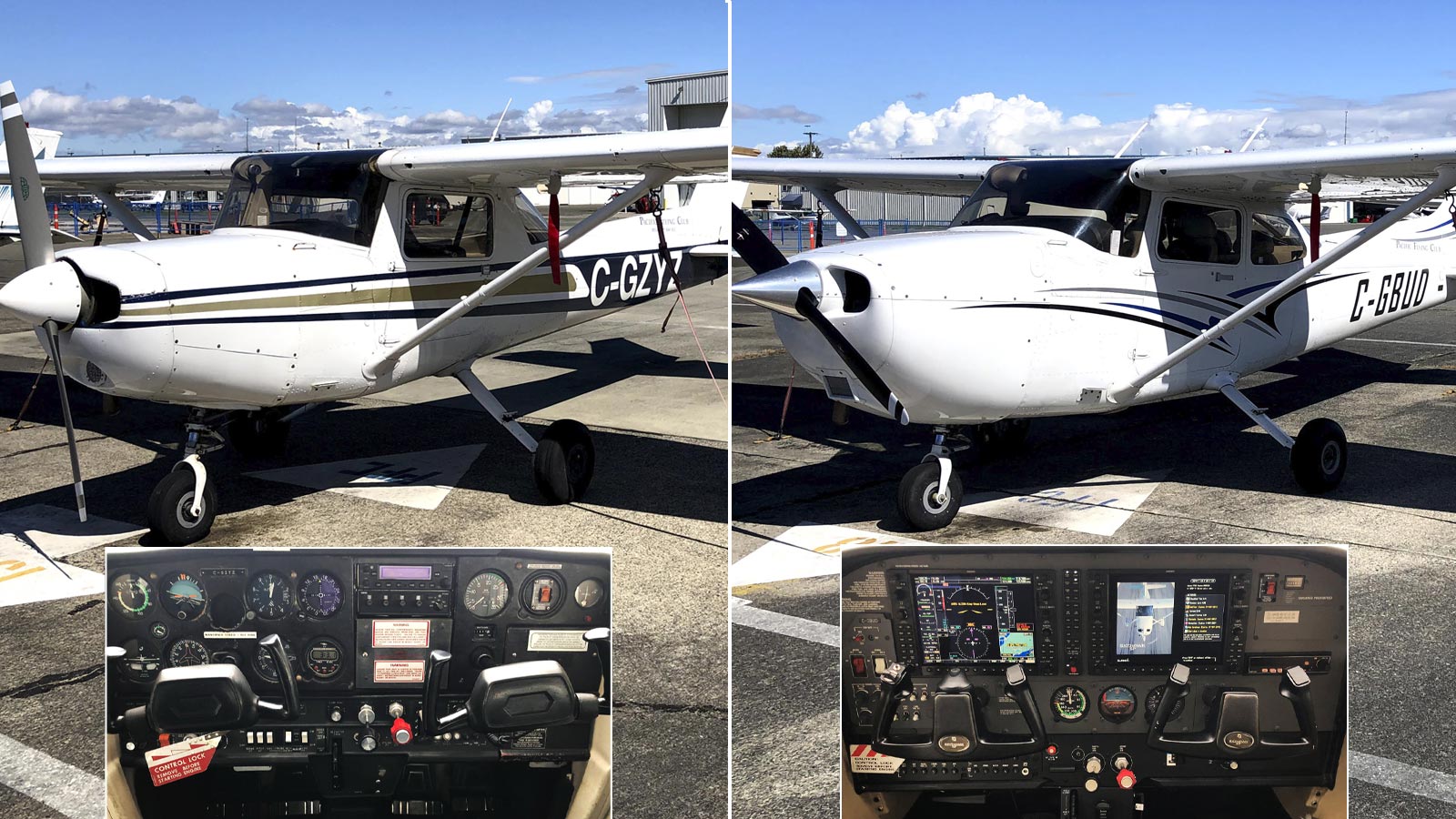
There are differences across PFC’s fleet. The 172P’s selector has an OFF position. On the 172R and SP there’s no OFF on the selector, and a separate fuel shutoff valve does that job. The 152 has no tank selection at all: its valve is simply ON or OFF, and both tanks always feed together. Students learn these differences during their checkout, and it’s worth looking at the selector on every flight rather than assuming where it is. For more on the two aircraft, see Cessna 152 vs 172.
Fuel Vents
As fuel leaves a tank, air has to replace it. If it can’t, a partial vacuum builds and fuel flow slows until the engine stops. On the 172, the tanks are joined by a vent line, and the left tank vents to the outside through a small tube under the left wing, near the strut. The right fuel cap is also vented.
That vent tube is checked on every preflight for good reason. In May 2026, General Aviation News reported on a 172P that made a forced landing after an insect nest blocked its fuel vent. The airplane had sat unused for about 25 years. It’s an extreme case, but confirming the opening is clear takes only a few seconds.
Water in the Fuel
Water is the most common contaminant in aviation fuel. Rain can seep past a worn fuel cap seal, and moist air in a partly empty tank can condense on the cold tank walls overnight. Water is heavier than avgas and doesn’t mix with it, so it sinks to the lowest points of the system. That’s where the drains are: under each wing tank and at the fuel strainer.
In a sample, water shows up as clear droplets or a separate layer at the bottom of the tester. Good 100LL is blue, with a strong avgas smell. A sample that’s clear, colourless and odourless may be entirely water. Water reaching the engine can cause rough running or a total loss of power. In April 2026, General Aviation News covered a 172 that lost all engine power after water and debris got into its fuel system. Like the vent case, the airplane had been left unflown for a long time, about two years, which is one reason regular use and maintenance matter.
Why Winter at Boundary Bay Calls for Extra Care
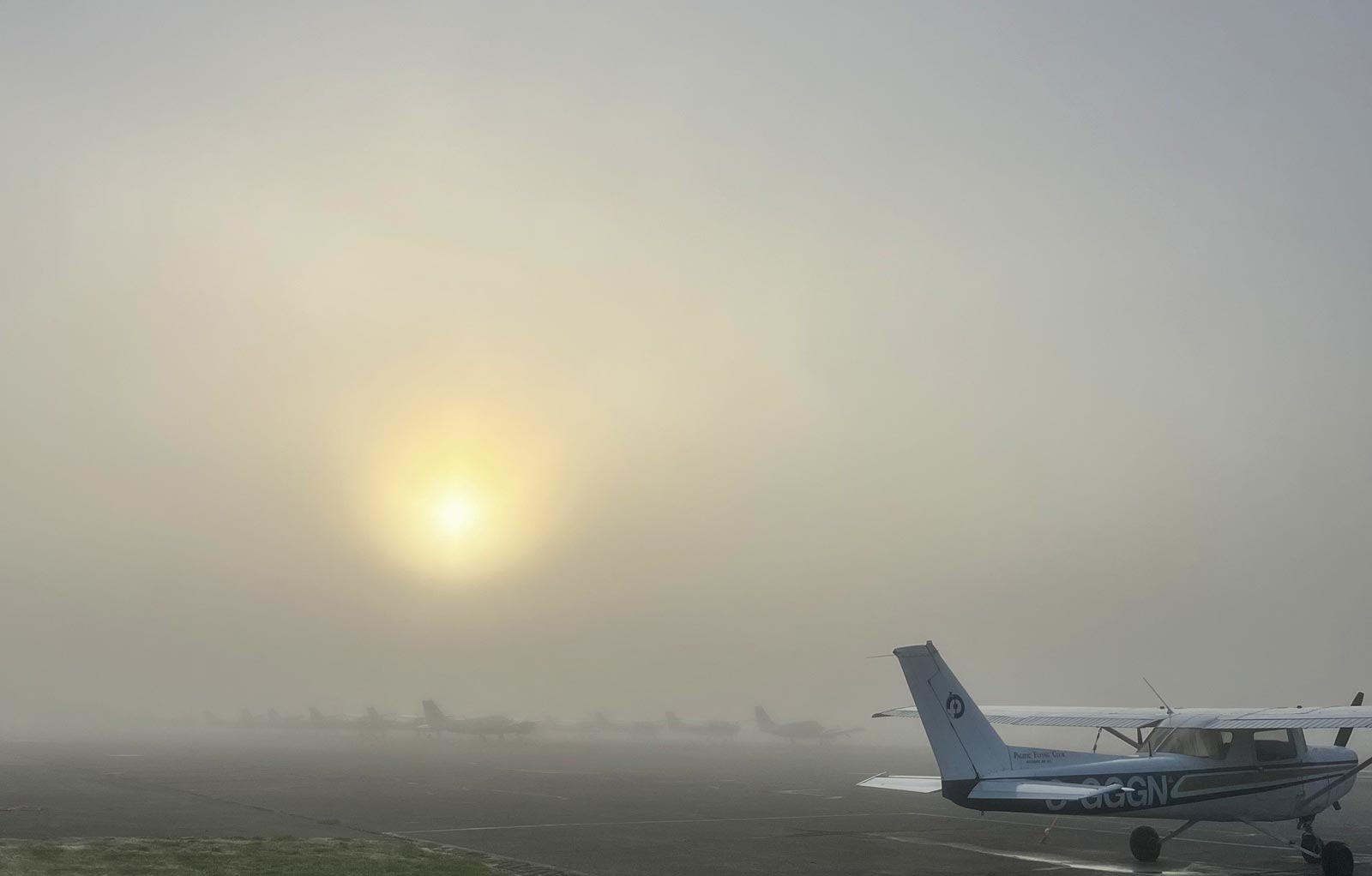
From November through the winter, the Lower Mainland sees long stretches of rain, and training aircraft spend their nights tied down outside. That gives water more chances to reach a tank. AOPA’s guide to checking fuel samples suggests gently rocking the wings at the start of the preflight and draining the sumps near the end, so trapped water has time to settle toward the drains. In cold weather, it also recommends watching for small ice crystals in the sample. If a sample shows water, keep draining until the fuel runs clean, and talk to your instructor or maintenance if it doesn’t.
The Right Fuel and the Right Amount
The colour check also confirms the grade. PFC’s aircraft burn 100LL, which is dyed blue. Jet fuel is clear or straw coloured and smells of kerosene, and it can cause a piston engine to fail shortly after takeoff. The sample is the last chance to catch a fuelling mistake. For more on 100LL and the move toward unleaded fuel, see our article on the Cessna 172 engine.
Quantity matters as much as quality. The handbook notes that the fuel gauges can’t be relied on during slips, skids or unusual attitudes, so instructors teach students to confirm the quantity with a calibrated dipstick before every flight. Canadian Aviation Regulations also require a VFR reserve in a piston aircraft of 30 minutes at normal cruise by day and 45 minutes at night.
Learning the Fuel System at PFC
The fuel system is one of the first aircraft systems students learn in detail, and it comes up again in ground school, on the written exam and on the flight test. The habits carry forward, too. Every aircraft you fly after the 172 has its own fuel system, and checking every drain and knowing where the selector should be applies to all of them.
Our Private Pilot Licence course covers aircraft systems in ground school and on the ramp with your instructor, and you can see the aircraft on our Cessna 172 fleet page. Earlier articles in this series cover the fixed-pitch propeller, the high-wing design, how the 152 and 172 compare and the engine.
Start Your Private Pilot Licence at PFC
Fuel systems, engines and the rest of the 172 are all part of private pilot training at Boundary Bay, taught in ground school and in the aircraft with your instructor. Learn about our Private Pilot Licence course »